
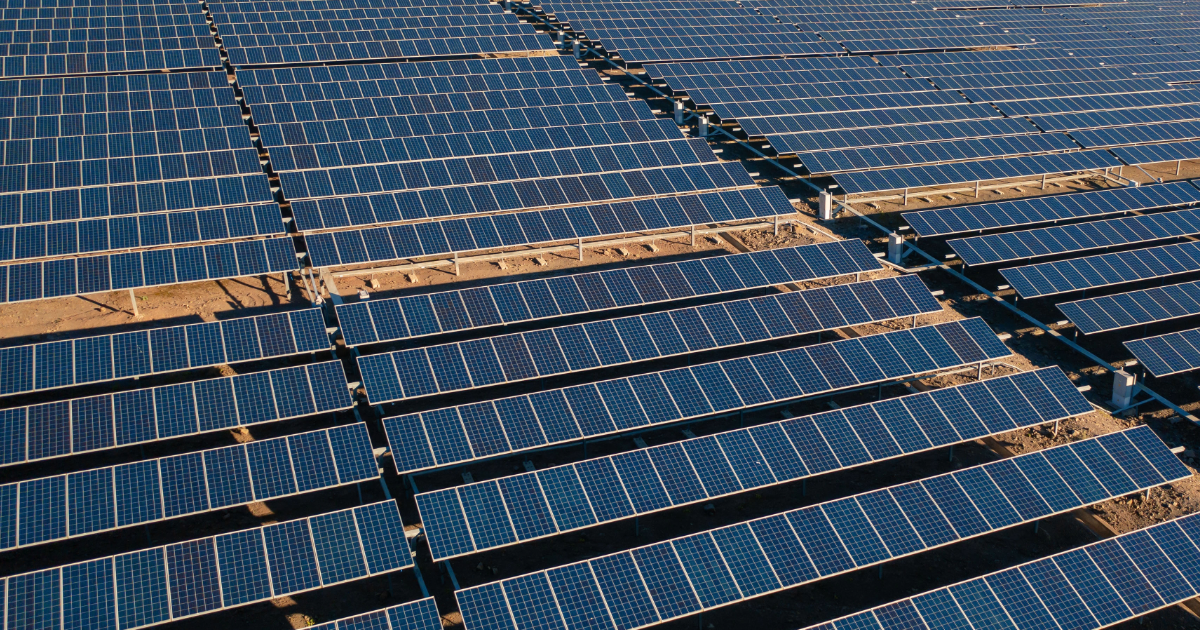
In eastern Oregon, Meta runs a large data centre at Prineville. It uses ordinary utility power, that could be coal-fired. But no one uses plain English when it comes to any of this, so you could be misled into believing it is entirely powered by its own solar farm. If you don’t understand financial markets and if you accept the associated media releases at face value. To understand, you need to refuse the official propaganda and seek to understand how it actually works.
I have experience at this because I have learnt from key institutions in Australia, whether it is managers at the Bureau of Meteorology or at the Great Barrier Reef Marine Park Authority, their particular expertise is in shifting understanding from what is actually happening to whether the file is in order. This is helped by the employment of managers at such institutions with no actual understanding of climate or corals, to use the BOM and GBRMPA as live examples.
They understand policy, and so once the file is in order, the campus can be called clean, the managers have done their job, and anyone who asks about the wires sounds unserious — as if they had failed to understand the process.
It is as bad as all of this. Let me example with this example from eastern Oregon, Meta’s Prineville campus sits on ordinary utility power. To repeat myself.
The electrons that arrive there are the same mixed stream everyone else on PacifiCorp’s system receives: whatever is generating that hour — coal, gas, hydro, wind, solar — blended on a shared grid. There is no private sunshine cable into the server halls.
And yet the company has long been able to say the campus is matched with 100 percent clean energy, even ‘emission-free’ in the language of corporate sustainability. That sentence is not a description of the wires. It is a description of a purchase.
That purchase is a useful place to start, because it was real. It is also a perfect specimen of what I am going to begin by calling a ‘claims market’: a market whose product is not cleaner power at the meter, but the legal right to say the power is clean.
What actually happened in Oregon
In 2018, Pacific Power signed long-term power purchase agreements — PPAs — with solar developers for hundreds of megawatts of new projects, including about 100 megawatts near Prineville and more in Utah.
A PPA is simply a contract to buy electricity, or the rights around it, for many years at an agreed price. Utilities use them all the time. Developers need them so banks will finance construction.
Facebook, as it then was, did not generally own those projects. It did not typically write the construction cheque. What it bought was the green sticker that comes with the generation: the renewable energy certificate, or REC.
A REC is a bookkeeping instrument. One megawatt-hour of qualifying renewable generation creates one certificate. The certificate can be sold separately from the electricity. Whoever retires it may claim that megawatt-hour as renewable. Everyone else on the same mixed grid still uses the mixed electrons that could come from coal.
Facebook paid a premium for those certificates from new projects. That payment made Pacific Power’s PPAs cheaper to carry, which helped the solar installations get built. The power still flowed onto the shared western grid. Facebook retired the matching certificates and reported its data centre as 100 percent renewable.
So two things were true at once. New panels went up in Crook County and elsewhere. And the servers kept drawing ordinary grid power. The ‘emission-free’ claim lived in the certificate ledger, not in the physics of the substation.
If you do not understand RECs and PPAs, the press release sounds like a data centre running on its own solar farm; as though solar panels in any way are equivalent to farming.
It is important to understand, it is really just about a claim to something solar generated sitting on top of access to electricity.
A claims market needs believers
In a recent Counterpoint on Substack — Net Zero Is a Ponzi Scheme Built on CO2 Exhale from Oceans and Forests — I argued that carbon credits are a rentier instrument: a tradable right created by policy and narrative, valuable only while institutions treat the claim as discharging an obligation. Fees accrue to verifiers, brokers, registries and banks. The underlying ‘asset’ is often diffuse, hard to verify, and would have likely happened anyway.
The Oregon REC structure is a cousin of that system, even when the project is real.
The product Meta bought was not a guaranteed absence of fossil generation on the Prineville feeder. The product was permission to report neutrality. That permission has a price only while managers at key institutions, regulators, investors, journalists and customers accept the matching rules. Stop accepting them, and the premium collapses. It will only keep working if 90% of us keep our eyes and minds closed.
How responsibility is dissolved
In Modernity and the Holocaust, and later works, holocaust survivor Zygmunt Bauman explains that modern institutions often do not need secret villains. They need process. Work is cut into steps. Each step has a form, a standard, a vocabulary. The person at each desk can say they followed the procedure. I have two brothers and a sister expert at this. They refuse to discuss the whole of any of these things with me whether it be counting Giant Potato cod at the Great Barrier Reef or my new Theory of Climate Resilience.
They, like all Australian who are successful within the established system that rules over us, insist that everything be kept separate. In bits. They go along with the international order that is enforced here in Australia by Goldman Sachs bankers including Josh Frydenberg. If you think I draw a long bow with any of this, it is a fact that he was a former Australian government minister with direct responsibility for the Australian Bureau of Meteorology.
It is the opposite of what is described in Jungian psychology as integration.
I know there is some value in putting all the pieces together, even having the hard conversations, so I resist.
Zygmunt Bauman called one version of their approach adiaphorization. Specifically acts are made morally indifferent by being redescribed as technical. Not ‘is this true?’ but ‘does this comply?’ Not ‘did the data centre stop using mixed-grid power?’ but ‘were the certificates retired under the protocol for the campus?’
That is the managers’ expertise. They are fluent in process. Their craft is to keep every fragment clean with no understanding of what any of it means in reality:
- the PPA is a normal commercial contract
- the REC is a recognised instrument
- the verifier signed
- the registry retired the serial numbers
- the sustainability report used the approved market-based method.
Each clause is tidy. The muddle is in the join. ‘Emission-free data centre’ sounds like physics. The paperwork is only a claim. The institution never has to say the second sentence in the same breath as the first.
You can say the muddle is deliberate without claiming a smoke-filled room wrote a lie from scratch. Deliberate here means selected. Plain speech would be:
We use PacifiCorp’s electricity that could be 60 percent coal fired. We paid for the green attributes of new solar so we may report our use as renewable.
That sentence is accurate and commercially colder, even creating the picture of emissions from a coal-fired power plant. It does not give you ‘emission-free.’ So the public language is chosen because it does work the accurate sentence cannot do: it converts a purchase of paper into a moral result and the right image.
Bauman would describe the pattern: moral weight is shifted from what happened to whether the file is in order.
Once the file is in order, the data centre can be called clean, the managers have done their job, and anyone who asks about the wires sounds unserious — as if they had failed to understand the process.
Not only do I ask about wires, but I will never stop asking that the Giant Potato Cod be counted honestly and accurately at the Great Barrier Reef. Worse I will continue to insist that the actual measured temperatures for places like Rutherglen be reinstated, that the industrial scale remodelling of temperatures across the world be seen for what it is: corruption of the record to justify an energy transition.
Net Zero as Ponzi
Continual buy-in matters. Data-centre load grows. The claim is annual. Next year’s megawatt-hours need next year’s retired certificates. More companies must keep making Net Zero pledges. More governments must keep blessing the accounting. More projects must be packaged so there is something to buy. When the story is the store of value, the store of value needs new customers. Managers are needed across institutions to keep the narrative current – even to paint pictures of the need for solar farms in Oregan to save the Great Barrier Reef. Interestingly, Josh Frydenberg who now works at Goldman Sachs is directly responsible for the appointment of the current head of the Great Barrier Reef Marine Park Authority, Josh Thomas.
A classic Ponzi pays earlier participants with money from later ones and has no sufficient underlying profit. Net Zero-by-certificate is not that crime. Real plants get built. Real construction jobs may appear. Some so-called fossil generation is displaced for some of the hours that the Sun is shining.
The resemblance is moral and structural, not forensic. Both depend on an accounting story that is hard for outsiders to audit in real time. Both require the next round of belief. Both offer a ‘return’ that is not a tonne of coal left in the ground at that exact place and hour, but a claim of progress. Complexity is not an accident. Baselines, registries, vintage years, grid regions, bundled versus unbundled attributes: the fog is part of what keeps the claim marketable.
Call it a confidence market if ‘Ponzi’ feels too sharp for you. The mechanism is the same: the paper is only as good as the audience. The narrative. The picture in your head.
Finance on top
Industrial investment builds infrastructure. A claims market sells an administrative privilege — the right to report that an obligation has been met.
In Oregon you can watch the two layers. Layer one: Invenergy and others build arrays; Pacific Power buys energy for its system; some extra solar exists that might not have existed in that form, on that timetable, without the corporate offtake for attributes. Layer two: Meta’s sustainability report treats retired certificates as equivalent to emission-free operations. There is actually a third layer, and I will get to that.
Layer two is where finance capitalism, in Michael Hudson’s sense, finds its climate product. The scarce thing is not sunlight in Crook County. Sunlight is abundant. The scarce thing is the authorised story. Intermediaries collect rent on the story.
That is why the mangrove-and-ocean argument in my most recent Substack article belongs next to Prineville, not in a different drawer.
Blue-carbon boutiques package biological work that forests and estuaries have been doing for millennia. REC matching packages grid physics that cannot be unspliced electron by electron. Different wrapping. Same move: turn a hard-to-verify environmental narrative into a tradable claim, then tell the public the claim is the climate outcome.
If the physical premise is weaker than the marketing — if much of the year-to-year rise in atmospheric carbon dioxide is a residual of ocean and biosphere exchange, as I have explained with Ivan Kennedy in our preprint about oceans exhaling carbon dioxide given the current warming cycle and in my new Theory of Climate Resilience — then the claims market is not merely leaky. It is a cathedral built on a lie. The certificates can still clear. The reports can still say net zero. The atmosphere does not read the registry, and the oceans and forests keep exhaling.
Back to Prineville
Keep the example in your head, because it prevents the discussion floating off into abstraction.
Somewhere solar farms and a giant data centre were built, perhaps in different places. Local officials were glad of the investment. The utility got new contracted generation. The company got to say the campus was matched with renewable energy. None of that requires you to pretend the servers ran only on Oregon sunshine.
What it requires is that we stop treating the claim as the same thing as the electricity delivered.
Net Zero, as practised by large electricity users, is often not an engineering result. It is a claims market. And it does resemble a Ponzi regime not because every solar panel is fake, but because the advertised virtue is a perpetual matching exercise that works only while new buyers, new mandates and new certificates keep arriving — and while the public still confuses retired paper with a ‘clean’ grid.
There is a further layer, a third layer. It is the one that clearly turns the bookkeeping trick into something closer to deceit.
Suppose the matching story were physically true — suppose Prineville really did run, hour by hour, on new Oregon solar. Even then the climate claim would hold only if the extra carbon dioxide in the air were mainly a waste product of that electricity. If I am correct, however, in my explaining that the recent year-on-year rise in atmospheric carbon dioxide is more likely a residual of ocean and biosphere exchange — more exhaling than inhaling in a natural cycle, with mature forests and peat in the same ledger — then swapping certificates, or even swapping generators, will not reduce atmospheric levels of carbon dioxide they will keep rising with the current warming cycle.
If the atmospheric increase is not a simple stack of smokestack tonnes waiting to be cancelled by a REC, the second promise collapses with the first. You would have paid for a claim that the data centre was clean, and a claim that the claim would cool the planet, while the ocean and the forests keep exhaling.
This post was inspired by a comment from Oregan resident @AlChristie at my Substack.
 Jennifer Marohasy BSc PhD is a critical thinker with expertise in the scientific method.

“O, what a tangled web we weave,
When first we practise to deceive!”
The underlying deceit is the falsehood that there is a danger from “man-made CO₂-emissions global warming”.
Partly started by Margaret Thatcher, and by the French who wanted to sell their nuclear power, but now carried on by financialists.
I worry sometimes, about posting about something that I haven’t visited. I’ve been pleased to be in correspondence from someone who actually lives in Oregan, and is interested in these issues. More here: https://alchristie.substack.com/p/oregons-mighty-data-centers
You’ve posted an interesting piece for me anyway Jennifer, in spite of your not visiting .
A giant Ponzi scheme is a good description of this whole business.
Are other consumers of electrons aware that for every REC that Meta and the like use in their virtue signalling, the remaing electricity becomes “dirtier”? Are they happy with that?