For more than twenty-five years, the Great Barrier Reef has been at the centre of a tightly managed scientific narrative. We are told the Reef is in crisis and that radical interventions, including the genetic modification of corals, are now necessary to save it or we are told that coral cover is at record highs and that everything is fine. We are not allowed to discuss the very real phenomenon of sea-level fall that is the more significant long-term trend, over the last few thousand years. Of course, the sea-level fall has very significantly impacted coral cover which is much lower than it was just a few thousand years ago.
The mainstream media (especially the Australian Broadcasting Corporation), institutions (including the Australian Institute of Marine Science), think tanks (including the Institute of Public Affairs), and other bureaucracies (including James Cook University) control what we understand about the Great Barrier Reef. And they work hard to keep genuine public understanding of the ecology, geography and geological history of the Great Barrier Reef at a distance. They do this not only by controlling the data and the narrative, but also by ensuring there is no opportunity for discussion about relevant new scientific findings that might contradict the dominant narrative and the proposed alternative of record high coral cover.
We are able to disagree, but always within the same narrow and flawed paradigm that is a nonsense.
This is exactly what happened with the Peter Ridd case. Many Australians donated to his legal campaign because they wanted the actual science about the Reef to be properly examined in public. They wanted to know whether the claims being made were robust, or whether evidence was being selectively presented. Instead, the case was reduced to questions of employment contracts and procedural fairness.
The substantive scientific issues — including the reliability of the monitoring methods and the use of historical photographs as evidence of widespread decline — were never tested in court.
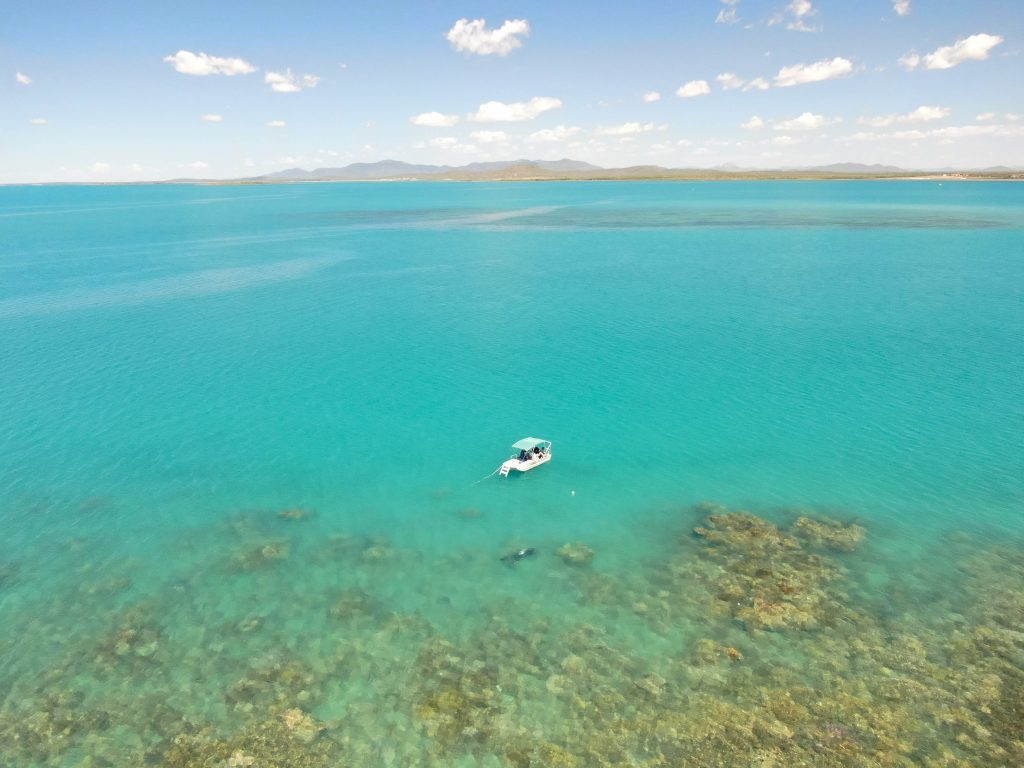
Yet just in time for the Peter Vincent Ridd versus James Cook University court case an important peer-reviewed study was published with important details about the geography and geological history of Bramston Reef — the exact location that sparked the original disagreement between Peter Ridd and Terry Hughes. Indeed, Bramston Reef, like many inshore Great Barrier Reefs, began growing during the mid-Holocene sea-level high stand, when sea level was about 1 meter higher than today.
As sea level fell during the late Holocene, vertical reef growth slowed and eventually halted due to limited accommodation space, leading to a decline in reef accretion.
The reef’s development and periods of decline were closely linked to these natural sea-level changes, demonstrating that coral communities at Bramston Reef have persisted and adapted through significant environmental shifts, including episodic sedimentation and sea-level fluctuations, long before modern human impacts.
The Ryan et al study provides a detailed reconstruction of Bramston Reef’s growth and decline since the Holocene high stand, revealing key phases and drivers going back not 150 years, but showing the relevance of understand sea levels change back at least 5,000 years.
Growth History of Bramston Reef
Initiation and Rapid Growth (ca. 5400–3000 years before present [yBP])
- Bramston Reef began growing at or before 5400 yBP, during the mid-Holocene sea-level high stand when sea level was about 1 meter higher than today.
- The reef initiated in a muddy, terrigenous sediment-rich environment and rapidly accreted vertically (2.5–3.6 mm/year) to reach sea level by about 4256 yBP.
- After reaching sea level, the reef expanded seaward quickly (average 19 cm/year) for about 1000 years, forming much of the present reef flat.
Deceleration and Hiatus (ca. 3000–2000 yBP)
- Around 3000 yBP, the rate of seaward progradation slowed significantly (to about 9.8 cm/year), and vertical growth was constrained by falling sea level and limited accommodation space.
- This period saw episodes of rapid mud deposition, temporarily burying reef framework and causing a decline or hiatus in net reef growth. These changes occurred well before European settlement and were driven by natural environmental constraints, especially late-Holocene sea-level fall.
Recovery and Modern State (ca. 2000 yBP–present)
- Reef growth resumed after 2000 yBP as sea level stabilised near its present level, but at slower rates and with growth mainly constrained to the reef edge and slope.
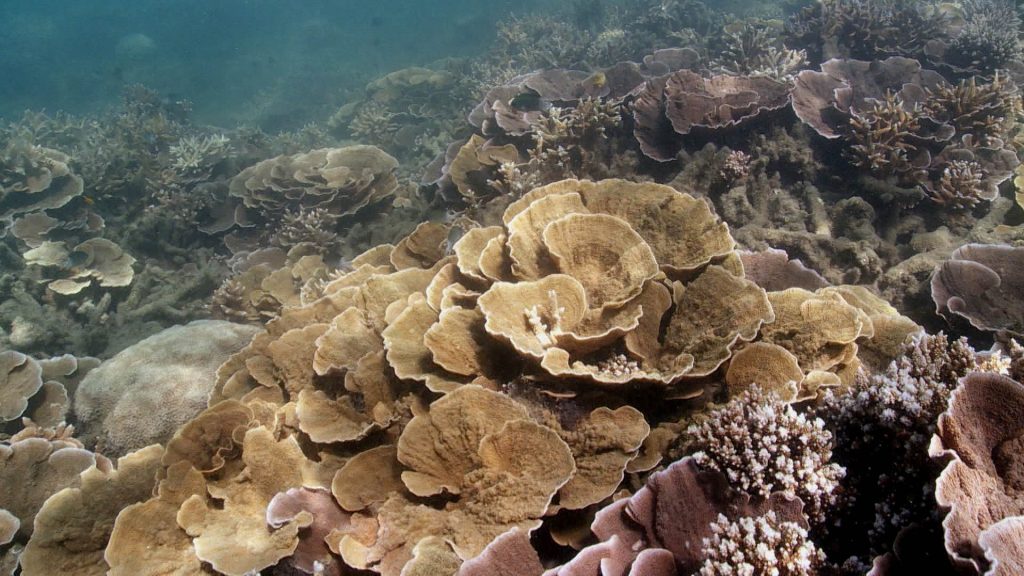
- The ecological composition of the reef has remained relatively stable, with key reef-building coral genera (e.g., Acropora, Montipora, Euphyllia, Porites, Goniopora) persisting throughout the Holocene.
- Today, the reef flat is dominated by algae and seagrass, with live corals mainly restricted to lower elevations near the reef edge and slope.
Political Implications
To be clear, the main decline in reef growth occurred long before significant human impact, primarily due to natural factors such as sea-level fall and sedimentation events.
Bramston Reef has demonstrated the ability to initiate, grow, decline, and recover in a naturally turbid, muddy environment, challenging the notion that such conditions are inherently detrimental to reef growth.
The coral community structure has shown remarkable persistence over millennia, indicating resilience to both environmental variability and episodic sedimentation.
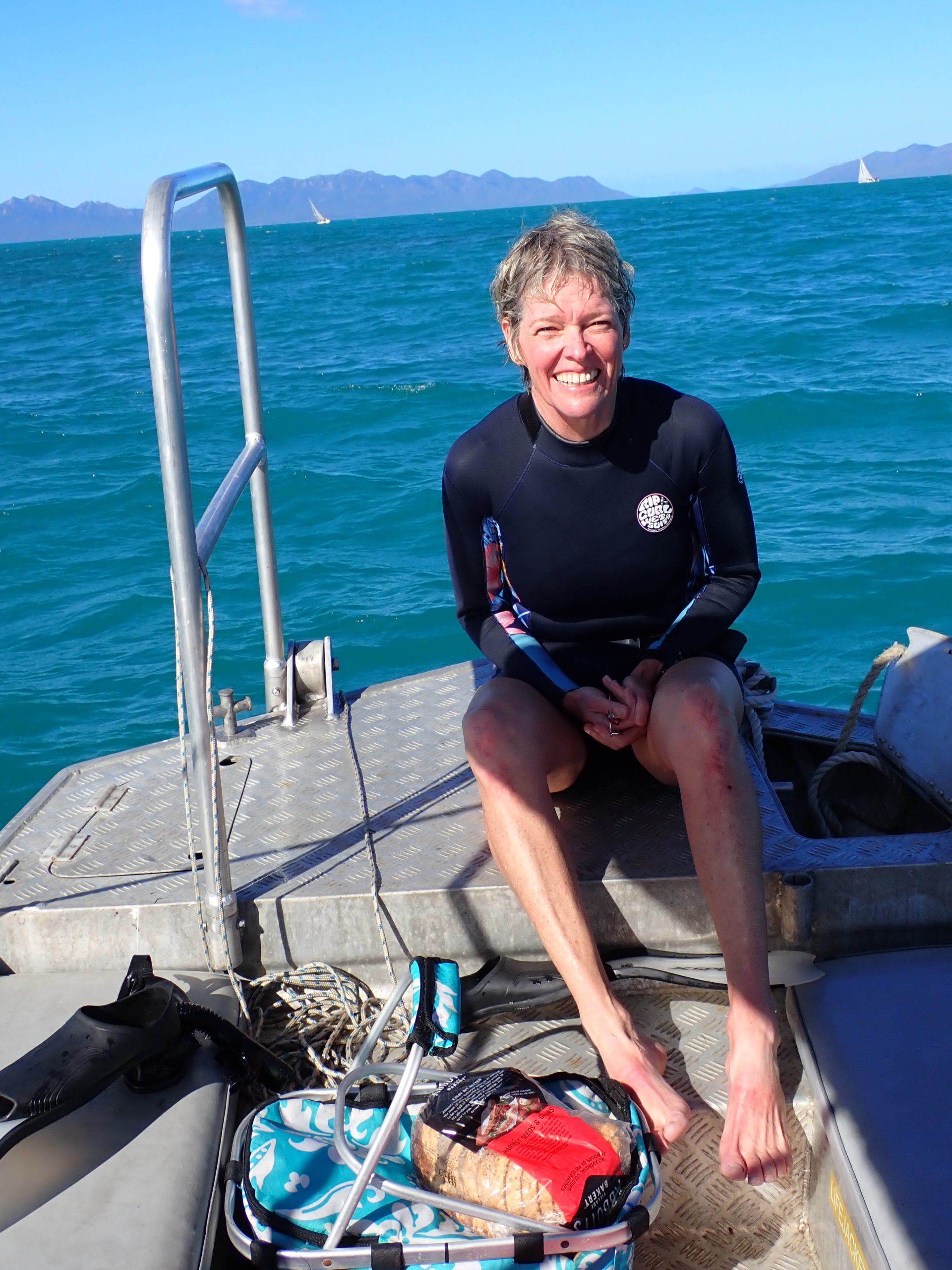
The feature image (very top) shows me on the boat just beyond Bramston Reef proper with a view to Gloucester Island, after snorkelling the reef.
The relevant study is: Ryan, E.J., Smithers, S.G., Lewis, S.E., Clark, T.R., & Zhao, J.X. (2016). Chronostratigraphy of Bramston Reef reveals a long-term record of fringing reef growth under muddy conditions in the central Great Barrier Reef. Palaeogeography, Palaeoclimatology, Palaeoecology, 441, 734–747. https://doi.org/10.1016/j.palaeo.2015.10.016
 Jennifer Marohasy BSc PhD is a critical thinker with expertise in the scientific method.

Thank you Jennifer
Your stuggle to obtain the truth is noted and applauded.
Thank you Jennifer. Can you give us some idea of the published and reliable information as to the sea level history of the East coast of the Australian continent?
Quoting your article immediately prompts the response, how do you know the sea level all that long ago.
Thanks Phillip. I have read a lot over the years from Belperio et al. 2002 that is a study of the Lower Murray that accords with what I see down there in South Australia, to Lewis and Wust 2013 about the Great Barrier Reef, then there is Nunn and Reid about Brisbane airport and I’ve also poked about those mangoves near the airport, and there is Sloss about the New South Wales coastline that I have also explored.
This note is about Bramston Reef/Stone Island and its corals and what you find when you walk out beyond the mudflat and beyond, I’ve also taken a paddle board out.
If you like we can explore my first blog post about Bramston Reef in more detail that provides some very specific geography, https://jennifermarohasy.com/2019/05/corals-other-side-of-mud-flat/
I like to see how the technical literature fits with what one observers, and the Holocene High Stand and the sea level fall narrative makes sense in terms of the Australian shoreline.
In contrast, none of the information about recent temperature rise or even dramatic sea level rise makes sense in terms of what can be observed either along the coast line or in the measurements or in the technical literate that takes a slightly longer view back beyond the last 150 or so years.
Thanks for your question.
The forces of ignorance and darkness are ever active, and we need them to be resisted. Champion, Jenn.