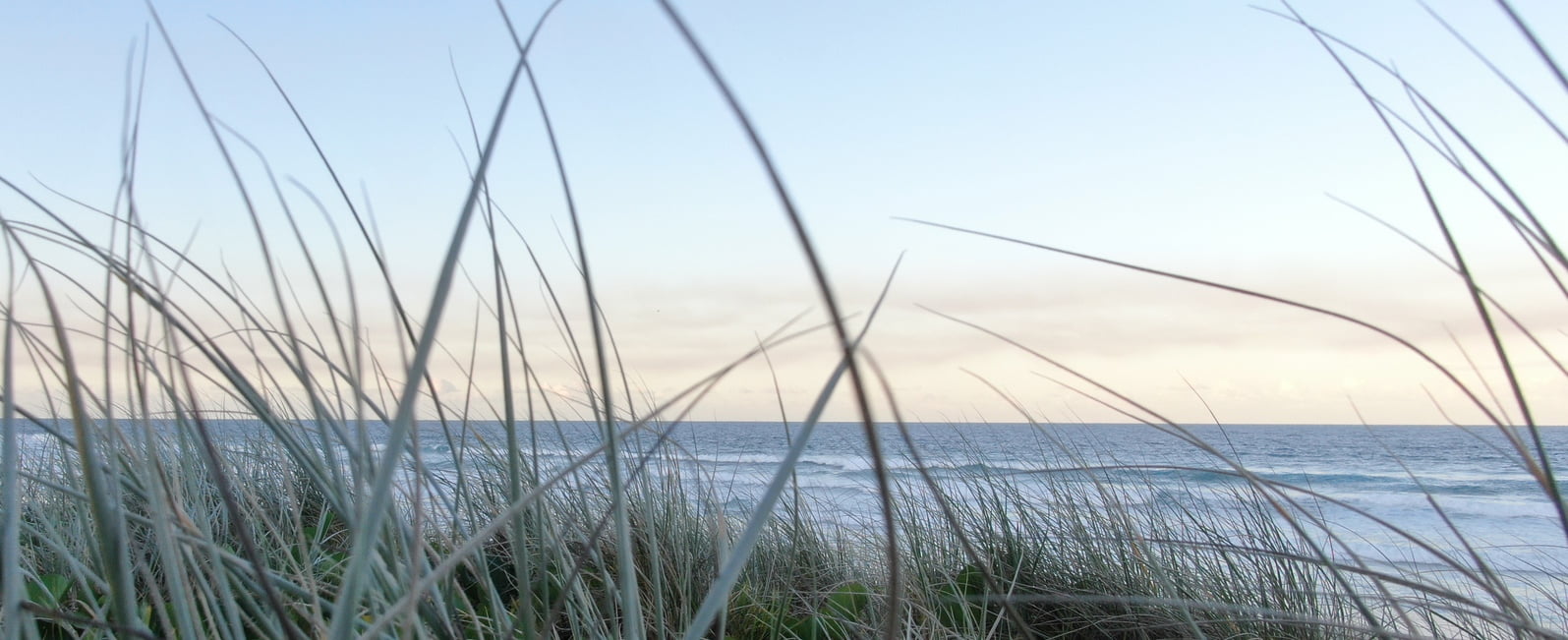
There is a lot of forest in Tasmania.
In the south east of the island, there was once a thriving timber town known as Wielangta. In its heyday it had a general store, bakery, blacksmiths’ shops, a school and of course several saw mills.
Wielangta was ravaged by bushfires in the 1920s and abandoned in 1928.
I visited the area yesterday with Phelim McAleer and Ann McElhinney – the Irish born producers of Mine Your Own Business.
All we saw was forest. The town has disappeared.

This is some of the beautiful blue gum forest we saw along the Wielangta forest drive.
The forest has re-grown and like most forest in Tasmania is now falsely considered pristine wilderness. But within the forest there is a rusted boiler and decaying tramlines — all that remains of the once thriving timber town known as Wielangta.
Interestingly, according to the website dedicated to Bob Brown’s fight to stop logging in Wielangta forest, this forest is described as “the most untouced and secluded area within 50 km of the Hobart CBD. It is a tiny fragment of the complex biodiversity here at the end of the last Ice Age.”
Wielangta forest is home to the swift parrot, wedge-tailed eagle and broad toothed stag beetle.
Parts of the forest have been cleared felled and then burnt by timber workers since European settlement. And the forest has always regrown.

Here’s Phelim in a recently burnt coup, perhaps looking for the town that disappeared?

Here’s Phelim perhaps looking for the ancient Wielangta (broad toothed) stag beetle.
—————————-
Thanks to Alan Ashbarry for taking us to Wielangta and for organizing the Tasmanian showing of Mine Your Own Business. Following the screening last night there was much comment over drinks, about how relevant the film is to Tasmanian timber communities struggling to survive against environmentalism. The film will be screened tonight (Wednesday night) in Sydney and tomorrow (Thursday night) in Perth. For more information visit http://ipa.org.au/events/event_detail.asp?eventid=120 .
 Jennifer Marohasy BSc PhD is a critical thinker with expertise in the scientific method.

Neither is it environmentalism, nor are they environmentalists. (We) must stop dutifully playing our part in this choreography of lies.
‘Environmental injustice’ doesn’t relegate the complainant to a self-implied opposition to everything environmental.
Dear Jennifer,
There are hundreds of examples around Australia where beautiful, well-loved and productive forests now grow in the wake of past timber cutting and regeneration. In WA many areas cut for timber as recently as the 1970s (including areas clearfelled) have been put into national parks because of their beauty and “high conservation value”. The Boranup and Shannon River forests are two examples, but an even better one is the former State forest near Mundaring Weir (now a national park) cut over for firewood to fuel the steam pumps for the Goldfields Water Supply Scheme. These forests provided up to 18,000 tonnes of jarrah firewood every year from 1902 until 1955, were partly ringbarked during the years 1905-1910, and were then almost completely clean-cut. Regeneration was progressively undertaken, and fire protection instituted from about 1920 after the formation of the Forests Department. Today they are known as The Hills Forest and are a mecca for city folk because of their beauty and wildlife. They still continue to protect the water catchment, but no longer provide timber, even firewood. This is banned in the national park because it will “destoy the forest”. Similarly, these forests are no longer subjected to green burning. This is a tragedy because some of the younger regrowth forests need thinning and green burning to stimulate their growth, and to ensure better water yields from the catchment.
Elsewhere in the world, especially in Europe, there are many examples of forests which have been cut, regenerated or replanted and regrown on 200 year rotations five or six times going back 2000 years, yet are today regarded as “precious old growth forest” which must be protected from timber cutting. The famous Forest of Dean in the west of England is one. I have written elsewhere about its history, including the fact that it was almost totally cut out during the Napoleonic wars, and replanted with oak following the intervention of Admiral Nelson himself, who was worried about future supplies of timber for naval ship-building. The oaks planted at Dean in the early 19th century today comprise the “old growth forest” which must be “saved”, according to British activists.
The idea that timber cutting destroys forests is only true if the cutting is followed by permanent agricultural or by urban development. If it is followed by planned regeneration and effective bushfire management, the forest regrows and eventually, as your example in Tasmania and my examples in WA demonstrate, it attains all the values of the original forest, including (eventually) old age. Examples abound throughout Australia of such forests.
This is a really positive story about successful environmental management undertaken by caring, capable and forward-looking conservationists (ie foresters). Someone could make a really good film about it. Al Gore for example.
Roger Underwood
At the Greenspirit site
Trees are the answer
http://www.greenspirit.com/trees_answer.cfm
Roger,
You did not mention the ‘old growth forest’ near Pemberton which was a wheatfield in the 1880s.
Here’s Phelim, perhaps looking for funding for Mine Your Own Business II. :o)
Am I mistaken, or is Phelim standing on a stump from a much earlier harvest. It is much older than the stumps from the recent harvest. So how many decades earlier was that one made.
And as another hot fire rips through 16,000ha of National Park (so far) in the Blue Mountains, isn’t it nice to know that we have these dedicated planeteers to protect our forests.
And the sick bathplugs won’t let anyone cut firewood. Perhaps that is what we should be calling it, National Firewood Parks.
I don’t think you can count on Al Gore making a movie about this. I think he would find the truth inconvenient.
There are many forests in Victoria’s, East Gippsland mountains, now referred to by the greens & co. as ‘pristine’, ‘untouched’ and ‘fragile’ that once had gold towns in them and like the timber towns referred to, have all but disappeared. The forests have taken it back.
Often wood was removed around the vicinity to feed the boilers, etc, with Walhalla being an example where locally, entire hillsides were stripped but now have returned to forest.
As Roger points out well, now we have overgrown forest in many areas, that are a wildfire threat and greatly reduce water run-off into waterways.
Many fauna maybe under risk of extinction from the current ‘lock it up’ mentality that we have. Thanks to the greens and their politics.
What a sad irony the greens are.
For those history buffs, the Tasmanian state library has a wonderful collection of old photos of the mill and the timber harvesting at http://images.statelibrary.tas.gov.au/Search/Search.asp?Letter=W&Subject=Wielangta+Sawmill+%28Tas%2E%29+%2D+History
Of course details of sustainable forest mangement in Tasmania forests can be found at http://www.forestrytas.com.au/forestrytas/pages/sustainable_fm_contents.htm
Stewie: Let’s see how the greens fare in your state election before we make a judgment on who is sad. BTW have you got a good candidate or two up your way?
Although Roger has made some positive observations about the potential of regrowth in all native forest;. I’m going to add something about old timber mills in general. Little mills are swallowed up by big mills as the timber resource becomes scarcer. Each lost site probably represents a period of over exploitation at the time the old mill closed. On this basis we can all see the natural progression of an operation reaching peak production early then a period of wallowing in decline.
Timber was removed around much of our coastline directly off the rocks by small sailing vessels running the gauntlet of reefs, tides and storms, a rather hazardous business at the best of times. Shipwrecks and boiler failures could bring about an abrupt end to milling. Motor transport would be another impact. Lots of the coast returned to nature as the situation of tiny mills became less profitable.
A hundred years of recovery around the edge may well be the best we have left in a given area today
*Little mills are swallowed up by big mills as the timber resource becomes scarcer*
Error, should read, “Little mills are swallowed up by big mills as State govts restrict timber resources.”
Ditto land, energy, water.
There is a stack of timber locked up by the Crown.
Greens will do well to a certain point, fanning the flames of apocalypse is not constructive.
Gavin,
In regard to your post about early Tasmanian timber-getting you seem in need of some light reading. May I suggest ‘Hearts of Oak’ by Bill Lietch retails for just under $30.00?
Bill describes the early timber harvesting the use of boats, jetties and tramways. I don’t think “Timber was removed around much of our coastline directly off the rocks by small sailing vessels running the gauntlet of reefs” was a very common method for those enterprising pioneers. Small mills are still operating in Tasmania, and whilst numbers have been adjusted over the years it is changes in markets that really has had the most effect, eg Apple cases used to all be made of wood, and were replaced with cardboard, houses used to be wooden framed as the norm, now its steel framed.
For those that want to test the accuracy of Gavin’s claims perhaps a look at the pier servicing the Wielangta mill at http://images.statelibrary.tas.gov.au/Fullimage.asp?Keywords=wielangta+jetty&x=10&y=12&ID=AUTAS001126182393 might be an eye opener!
Cinders; thanks for your jetty post. Note I also use the Tasmania Library postcard pics etc a lot and reckon it’s our best www quick history ref today. Recommended viewing on the wild west yes where I lived for a year or so and did my own bush mill tram track discovery. Bet I used it first here hey
In my study library just behind there is a copy of “Bass Strait Ketches” by Harold Salter (1991), A History of “Trains and Trams” in Tasmania (Cooley 1987), the “Peaks of Lyell” (Blainey 1959), and a number of books by Lou Rae (1991), however I saw quite a bit of the old stuff in still action when I was a youngster, I can say all their work is pretty good considering the number of former wild regions covered.
Cinder’s failed to note the significance of ‘general’ in my carefully chosen sentence “I’m going to add something about old timber mills in general” As I wrote I was still dreaming about our recent holiday studding bush timber, old mill sites, beaches and waves in national parks down the rugged south coast of NSW. This country is a tad bigger than Tasmania when it comes to wood. I have moved on (grin).
Readers should be most interested that NSW was settled 50 years before Tasmania and it took them a while to cross the Divide. Little ships, Ketches were the only means of robbing the forests here then.
Cinders may wish to consider this; we had over sixty bushfires raging around NSW yesterday. Save some mill wood for us please.
Rog hit the nail on the head here “Little mills are swallowed up by big mills as State govts restrict timber resources”. Mate; I see timber locked up by the crown as essential reserves and expect in time we will get round to rotating bits of this and that for good old fashioned sawlog again.
This topic highlights the rubbish about the “fragile environment” we get all the time. The fragile thing is mans built environment.
It always makesme think of a little place at the southeastern tip of New Guinea, Carna Cope, which I visited in the early 70s.
A magnificent spot, where a 60 meter wide entrance led into an enclosed 600 meter diameter, sheltered bay. This had made it perfect for a major US navy patrol boat base, during WW2.
It is not an area favored by the locals, as the soil is sand, & not suitable for vegetable gardens. This also makes it more suitable for coconut palms than jungle, but th jungle was starting to win.
The nissan huts had long gone, but there were acres of concrete slabs, where they had bean. Most of these had trees growing out of them, but, it was what must have bean the machine shop area, which most surprised me.
Here the slabs were mostly 4 Ft thick, & thicker in some areas. In some places, rusting steel [machinery bolts?], had given access for trees to grow, but in other areas there was no easy access for them.
I found 18 inch thick trees, growing out of the middle of some slabs. These trees caused up to 3″ wide cracks, for more stuff to grow. In some areas there were rivers of saplings, up to 35 ft long, exploiting, & spreading these cracks. It was a lesson in the power of nature for me. Fragile, not bloody likely.
I went to a little island group, 60 miles west of Boganville, which was a large PT boat, & Fighter base. It & Missima, an island between Bouganville, & Rabal, were used for advanced training of new pilots, to get advanced training, where someone shot back, against remnant Jap forces, bypassed on Boganville, & New Britain.
Here, I found the steps to the officers club, carved out of the rock, & a 60 ft wide, 20 ft high pile of aircraft machine guns, but I could not find the air strip, even when the locals led me to the abandoned aircraft sitting where it had stood.
One thing was easy to find. There was a very wide path leading to the one million miles of telephone cable the yanks left behind. The locals use it for everything.
One place which realy surprised me was a huge X US bomber base, with a 5 mile runrunway, on New Gorgea.
This strip was built by dredging live coral from the bay, pilling it feet thick, then watering, it with sea water, & rolling it for a couple of months. The story is, that the coral lives, & in trying to repair its self, froms a solid mass.
This may be the reason there was not a single tree penetrating the couple of miles I saw.
That, or it may be the moss. The business manager of the local mission told me, that in the year he had been there, there were only 3 days when they did not have some rain. This has lead to the strip being covered with 2 to 4 inches of moss.
This moss is so slippery that you can stand still, but you can not walk on it. If you want to cross the strip, you crawl. If you want to cross it with a vehical you go round the end, or use the bit the mission pump sea water onto. This is to kill the moss, so light planse can use it.
Apart from a few buildings the mission use, & maintain, I could find nothing else remaining but for some building materials scavenged by the near by plantation owners.
Sorry for this great waffle, but I thought some may be interested.
Yes Hasbeen. Similar in Bouganville where I lived for a little while.
We played in the pill boxes, on the tanks and planes left behind. The jungle was now growing out of the discarded hardware and same with trees growing thru reinforced concrete structures. Tenacious is mother nature.
I can remember a few years back when there was a great deal of fuss about Mt Stirling, the cross-country skiing resort in Victoria, John Brumby, the then opposition spokesman on the environment, standing on the mountain and declaring that it was pristine wilderness.
He was standing slap-bang in the middle of an old logging track, one of many which now make up the celebrated ski trails.
The point I wonder about; who paid for Jennifer to fly off to Tassie and promote an Irish film on behalf of whoever?
In case anyone is wondering. I have a bit of old irish blood and we are NOT getting into Irish jokes here.
And who pays for the Greens flying around? As non-profit organisations, it’s the taxpayers.
If anyone wants to know, Halls Creek 2:30pm 41.9 C, 1009.3 HPA.
Mad Dogs and Englishment play in the midday sun…..
Gavin asks:
“The point I wonder about; who paid for Jennifer to fly off to Tassie and promote an Irish film on behalf of whoever?”
He means “whomever”.
It would have to be Exxon, wouldn’t it?
Cathy
David Joss
Similar story at the “Otway Fly” in Western Victoria. Built over old logging tracks
Still well worth a look
Gavin uses the standard green tactic, when they can’t argue the message lets shoot the messenger. Some how discredit the message by asking who is paying as if this will undermine the startling facts presented by both Mine Your Own Business and by comparing the claims on the greens web site to an actual visit to Wielangta. I would assume that Jennifer would be paid by her employer, I would assume that funds were sought from all possible potential sources including the mining industry as the film was about mining to bring the film makers to Australia. I would assume that the WWF or Greenpeace, both featured in the documentary, refused to/did not fund the visit despite having global revenues greater than the communities featured in the film.
Perhaps Gavin, instead of worrying about money you could provide the current status and threats to the endangered species listed on the greens web site, and why they are still very much in residence despite all the timber harvesting noted by Jen and pictured in my first post on this thread?
As has been noted on this post and others on this site, we have a problem of ‘over vegetation’ in many of our ‘pristine’ forests.
Speaking in wildfire terms and tons to the hectare, we know that many forests which should have say 2-4 tons per hectare max., may often have 40 tons to the hectare, due to lack of fuel reduction burning.
Considering the 2003 wildfires burnt around six(?) million acres, a lot of which was heavily ‘overgrown’, it would make interesting mathematics to calculate the total tons of material burnt.
As a quick guestimate 6,000,000 million acres x 25 tons per acre = 150,000,000 million tons of material burnt.
Can anybody provide accurate summary as to how much material our ‘pristine’ forests provided in total fuels burnt during 2003.
How much smoke, in tons, would that then produce?
Cinders: for me it’s more about relationships than money. Be warned though I’m absolutely fascinated by what drives people in their campaigns on the internet. Networking behind others fascinates me even more. Note too I look for signs of close relationships behind other contributors here. IMHO compromise here can only come through from people with a great deal of personal experience at the relationship coal face.
Now I offer this next bit to you and your TCA in the hope some communities in your area can use it to their advantage. We don’t need money to enjoy all the opportunities in life.
I considered myself a good campaigner till I bumped into Bruce one cold day in Burnie. I kept tripping round his cap out on the pavement. This darned cap seemed to get closer and closer each time I passed so I crossed to the far side of the street to listen. Bruce had someone’s huge piano out on the footpath and he could really play good classical. It seemed I was the only one in town, everyone else had disappeared that lunchtime or slipped past with their nose in the air while Burnie was being tested.
Heckinger travelled the world with little more than a spare pair of jocks, a Frisbee, a bundle of photos and postcards. He crossed boarders quietly on his own but was welcome everywhere except Burnie and one or two other places most people forget. I think I phoned his mum in down town NY or she phoned me after he left and said he had settled round about in the most beautiful island on earth. Yes I guess the CIA wondered two.
Heckinger tempted fate every day but climbed through windows without trace. My young son was amazed when he scrambled halfway down the Nut over and over to recover his Frisbee. Freedom for Bruce in Stanley was just testing the breeze from the Strait with only one witness. That community had no idea he was even there but be certain he was their faithful ambassador for years.
Googlers won’t find much about Bruce or my own connections with any of those old “timber” communities. There never was a money trail behind it either. We did whatever at the time only on the spur of the moment too.
Just on the money side and for Gavin’s benefit relationships, there is a link between the film Mine your own business and the fate of the Wielangta forests. It is the multi national, trans-global capitalist clothing company Levi Strauss. A company that sales peaked at $7.1 billion in 1996, but in 2002, Levi’s U.S.-based parent company closed six U.S. manufacturing plants, eliminating 3,600 jobs. They now manufacture where the labor is cheap. The denim used is made from cotton, mostly likely genetically modified, most likely grown on areas where deforestation has occurred and most likely protected by a vast range of chemicals.
Whilst I see nothing wrong with this company there are others who might denounce it as environmental vandals, exploiters of workers, etc etc.
Where does it fit into environmentalism, well heiress to part of the Levi Straus fortune, Rhonda Goldman and her Husband (wealthy from the insurance industry) used their philanthropy to set up the Goldman Fund.
Answers .com defines philanthropy as
1. the effort or inclination to increase the well-being of humankind, as by charitable aid or donations.
2. Love of humankind in general.
3. Something, such as an activity or institution, intended to promote human welfare.
[Late Latin philanthrōpia, from Greek, from philanthrōpos, humane, benevolent : phil-, philo-, philo- + anthrōpos, man, mankind.]
Yet the Goldman Fund provides money to the environmental movement, providing funds to the Rainforest Action Network who have recently conducted a campaign against Tasmanian Forestry.
The Goldman Fund is also linked to the Goldman Prize, the ‘Nobel Prize’ for Environmental Activists. MYOB features footage from the Goldman prize as it honours Stephanie Roth for her efforts to stop the much needed goldmine.
The Wielangta Forests are currently on trial at the moment as Senator Bob Brown is trying to stop timber harvesting and close down the industry in these forests. Bob Brown is also a winner of the Goldman Environmental Prize just like Stephanie Roth in Romania. He won his prize for stopping a Hydro Electric Power Station and for his early campaigning against sustainable forestry in Tasmania.
It’s only a pity that the money meant to be spent on helping mankind, especially dragging communities out of poverty and providing the dignity of work, is actually funding environmentalists who want to stop this progress.
OK crew,
Let’s raise the bar here.
“Forests have been around for the last 350 million years … they are just as capable of recovering from logging as they are from any other form of disturbance. All that is needed is that the disturbance is ended, that the fire is out, that the volcano stops, that the ice retreats, or that the loggers go back down the road and allow the forest to begin growing back, which it will begin to do almost immediately.”
So we need to ban forestry to preserve biodiversity?
“Think of biodiversity on a scale of 0 to 100. You would have to admit that a city parking lot is pretty close to 0. There might be a blade of grass poking through in the odd place. A farm field or pasture might rate 5 or 10, compared to the original forest [scrub] that was cut down, burned and planted to make the farm. Forrestry, the way it is practiced today throught most of North America [and Australia] is 96, 98, 100, even 102. Because in some landscapes forest management results in a wider range of age classes and ecosystem types than would normally occur in the absence of human activity.” (And pitched environmental battles are being fought over 96%+ biodiversty?)
This is where I see the link between forestry and the Western NSW woody weeds problem. Do we abandon aboriginal knowledge of how to improve productivity while preserving, or even improving biodiversty through the creation of varying ecosystem types? On what grounds? That they used stone age technology – fire? Are our only acceptable land producivity systems to be in the 5 – 10 biodiversity range?
And needing to stop forestry to stop species from becoming extinct?
“There are three main ways by which humans cause species extinction. First, and perhaps most effective, is simply killing them all, with spears, clubs, and rifles. The passengerpigeon, the dodo bird, … [Tasmanian Tiger] and back in time, the mammoths and mastodons, are all examples of species that were simply wiped out either for food or because they were pests.
Secondly, the vast clearance of native forests for agriculture. There may have been an orchid in that valley bottom that was found nowhere else. If all the forest is cleared away, burned, ploughed and planted … the orchid may disappear forever.
Third, and actually the major cause of species extinction during the past 200 years is the introduction of exotic predators and diseases [and grazing competitors]. In particular, when Europeans cononized Australia, New Zealand, and the other Pacific Islands … they brought with them rats, cats, foxes, pigs, sheep, goats, chickens and cows, and all the other domestic animals and plants, including their diseases. The has resulted in the extinction of hundreds of ground dwelling marsupials and flightless birds, as well as many other species.
We have long lists of species that have become extinct due to these three types of human activity but we do not know of a single species that has become extinct due to forestry.”
All the above quotes from http://www.greenspirit.com/trees_answer.cfm
Helen – thanks for attempting to raise the standard of discussion.
I have a genuine question
See: http://en.wikipedia.org/wiki/Old_growth
as a brief potted summary of the issues – obviously one can see there are cited characteristics and importance attributed to old growth forests.
So I don’t think there should be much debate about the capacity of forests to regrow. But to grow into what and with what species ?
What studies do we have to show that biodiversity values are conserved. And I’m just asking (nicely).
Just to lower the debate back to the level of Luke’s last post. Perhaps this from Answers.com might be a reason for only having twenty years data on the science of Biodiversity:
Biodiversity is a neologism and a portmanteau word, from bio and diversity. The term biological diversity was coined by Thomas Lovejoy in 1980, while the word biodiversity itself was coined by W.G. Rosen in 1985 while planning the National Forum on Biological Diversity organized by the National Research Council (NRC) which was to be held in 1986, and first appeared in a publication in 1988 when entomologist E. O. Wilson used it as the title of the proceedings [1] of that forum[2]. The word biodiversity was deemed more effective in terms of communication than biological diversity.
Since 1986 the terms and the concept have achieved widespread use among biologists, environmentalists, political leaders, and concerned citizens worldwide. It is generally used to equate to a concern for the natural environment and nature conservation. This use has coincided with the expansion of concern over extinction observed in the last decades of the 20th century.
Definitions
Biodiversity has no single standard definition.
“Biodiversity has no single standard definition.”
Does ‘forest’?
cinders can you point to any science or discipline without an evolution of the terms in line with usage and experience? Language itself changes over time as does science, technology, nomenclature and pervasive mental paradigms.
Luke,
I am not academic. I know of no such studies. My experience is hands on and practical, and not with forest systems as such. But here are some suggestions.
Farmers can be pretty focussed. Put a target in front of them and they can be pretty good at working out how to achieve it.
So, from a farmer’s perspective, if I wanted to get maximum biodiversity out of an area, I would forget values and concentrate on biodiversity. The values would look after themselves.
Theoretically, find the oldest patches – and I mean old, not regrowth, and preserve them as species dispersion sources. Then manage the surrounding areas to lessen the risk of these dispersion sources ever being lost through fire.
This would have to involve controlled burning to create a mosaic of surrounding areas of varying levels of reduced fire level, and could well accommodate forestry, to further create regrowth areas with, dare I quote it, some 90% biodiversity remaining. And help pay for the management of these forests. These lesser fire prone areas are where you could allow some tourism. Tell them it is old growth, and they would not know the difference. We have been managing poeple for years. It doesn’t hurt to divert them away from the valuable stuff.
If we are really serious about biodiversity, we are going to have to get hard-nosed and farm for it Luke. Locking up areas and throwing away the keys is losing us too much.
Helen: I think we see quite a bit of attitude in your last post “Tell them it is old growth, and they would not know the difference. We have been managing poeple for years. It doesn’t hurt to divert them away from the valuable stuff” How can you dare to consider public forests as your own and turn the people into a mob of sheep?
Our native forests are not yours to farm; neither is your cattle herd mine to free.
Having said that we can all see a similar problem with minerals, water etc also wild fire control and any concept of burning mosaics likewise.
This problem begins with the start in many of Jennifer’s threads. Anybody can assume the right to a resource regardless but in the practical world there are many restrictions. Nobody has all the answers or the right to impose a particular view.
Wild fire management is the topic of the day in some regions. Do we dare to save the Grose Valley with a hundred km of backburns? The NSW Rural Fire Commissioner will cop it either way he chooses to operate during this crisis. Dare I tell him what to think on this issue? Can I tell him anything about all of us and where we stand?
Cinders: What happened to the modern timber mill on the rocks at historic Stanley?
Helen presents a thoughtful response and I am pleased to see. I am most hopeful for conservation measures on-farm. It’s our only hope in many respects.
Cinders – there is no need to retreat into a defensive position. I am genuinely asking if the species that had occupied old growth forests for millenia before logging are still well represented in modified and regrown systems. No tricks. No hidden agenda. Simply asking.
I was not quoting wiki as a definitive reference – just a potted summary of the issues normally raised. And I don’t think we need to get hung up on biodiversity – we can move to a working definition quickly. For example some sand mining rehabilitation work that I have seen is a monoculture of one species and a few ants and had none of the values of the previous system. I would suggest that origianl biodiversity had poorly recovered. No PhD needed. So I think we need not get ourselves all excited about ecological definitions.
Warrior
You are looking to be offended, and to attack, so you cannot hear the dry bush humour.
As far as the public not knowing old growth forest when they see it, how could they, when so much forest regrowth has been badged as ‘pristine’ by environmentalists.
They might be public forests, but if they are not under the control of rangers trying to contain public impact and where they go, then they bloody well should be.
No, we are not a tourist operation. We farm. We allow people – mostly locals – coming onto our property to get to where they want to go, in the way we want them to. And we try to contain their impact to one paddock. Done it for years.
Looks like the standard of discussion has gone South again. I’m off.
Just adding a pic of an old port near home re my post on little sailing ships and rocks
http://images.statelibrary.tas.gov.au/Fullimage.asp?Letter=B&Subject=Basalt+%2D+Tasmania%2C+Northwestern&ID=AUTAS001126074129
Luke; on the question of biodiversity after clearing and subsequent fires the whole coastline around Tasmania had some eucalypts down to the water’s edge. Once upon a time the basalt outcrops in the NW and sand dunes all had trees. Mt Wellington was covered right up to the snowline etc. We do not need concrete slabs in tropical forests to demonstrate how aggressive the bush is.
I would not use the word “pristine” as all the Islands burn easily every summer. IMHO repeated fires change the vegetation towards eucalypts and their natural understorey which must include big ferns. More ancient rainforest species disappear with bush fire frequency. Also eucalypts do best on basalt soils. Table Cape once had a eucalypt forest.
I know of no old growth forest in Tasmania that has existed for millenia. Whilst we have some trees species that can grow for a thousand years plus (Huon Pine) Forests have always been dynamic as they respond to change.
If old growth forest is defined as being a forest older than a thousand years, we in Tasmania, do not harvest ‘old growth’.
However as a Nation we do not accept this definition, instead we have developed a range of rules and definitions throught the National Forest Policy Statement amd the JANIS criteria for the Regional Forest Agreement. Evey State and the Federal Government have accepted these definitions a decade ago. In contrast it is only recently that the the international green movement has attempted to define High conservation Value forest.
Thus in relation to the species that exists in old growth forest before and after harvest, it is my experience and from the surveys and reports that I have read (even a great little coffee table book by Forestry Tasmania called “Seeing is believing”) the forest does grow back and given the rate and size of harvest species that live in forests either young or old are still well represented accross the landscape.
As part of the modern environmental management Australia has signed up to an international agreement to ensure that 10% of our forests are managed for ‘biodiversity’ in Tasmania this figure is exceeded, 45% of our forests are reserved in the name of conservation.
Patrick Moore provides some informed discussion on this point on the web site mentioned by Helen’s raise the bar post. From memory Patrick challenged the international green movement to provide the scientific name of one species that has gone extinct due to forestry, about a decade ago, no one has answered that challenge.
So if there’s no clear definition of forest then forests must not actually exist cinders.
We usually wait about 50 yrs before we declare a species extinct don’t we? It’s isolating a single thread of the issue. Do we have threatened and vulnerable species? Why and what else do we know? What to do about it? Could we deliberately farm it like Helen said.
Pinxi, you aren’t trying to mis-quote me, I’ve checked my posts and couldn’t find where I said “no clear definition of forests exists” although I did paste a statement like that about Biodiversity from Answers.com
for old growth forests I said that in Australia we used the National Forest Policy Statement to define terminology that has been accepted by the National and State Governments. The glossary http://www.affa.gov.au/content/output.cfm?ObjectID=D2C48F86-BA1A-11A1-A2200060B0A03139 from the NFPS defines forests as:
“Forest
An area, incorporating all living and non-living components, that is dominated by trees having usually a single stem and a mature or potentially mature stand height exceeding 5 metres, and with existing or potential projective cover of overstorey strata about equal to or greater than 30 per cent. This definition includes Australia’s diverse native forests and plantations, regardless of age. It is also sufficiently broad to encompass areas of trees that are sometimes described as woodlands. The focus of this Statement excludes woodlands.”
the NFPS statement led to the RFA, and as part of the RFA forests and their biodiversity was studied in detail and hundreds of reports made. Many that answer questions that you raise, so enjoy the reading!
Cinders
I can see why the greens have trouble with you guys – very defensive posture. Arms folded – glib answers. And I’m not trying to be rude or provocative.
(1) The forests obviously existed before Europeans arrived – and without the vital input of foresters – they seem to have survived till we got here. OK so few tree species themselves live 1000 years. Wasn’t the point.
(2) Of course the trees grow back. Many of us are curious about the fauna that live in these forests. Do they recover well. What impact does the logging event have?
(3) The bit about “greens need to prove a SINGLE species has gone extinct la la” – well we may not know if the surveys have not been done.
(4) As for hundreds of Fed reports – well if there is as good as what the AGO does they’re not worth diddly squat. Glib response. I was hoping that you might cite a few reports from your encyclopaedic knowledge of forestry practices and make some reassuring comments. Jeez if it was the cotton industry they would an answer down pat and rattle it off like the two times table.
(5) I think many Australians are not informed about what is high FPC closed canopy forests and what are woodlands. Some think everywhere looks like Tassy.
Pinxi,
What I was outlining in the “lets farm for biodoversity” post is actually the Land Management approach. A term that has largely been appropriated by the lock-it-up-and-throw-the-key-away brigade, so its meaning has morphed. The ‘farming’ analogy is now the clearer term.
And we have found that more than half of land management is people management. Get that right and the rest is much easier.
Now for the pleasure of getting right up the warrior’s attitude sensitive, politically corrrect nose, you could say we have been running two classes of livestock. Four Leggers for profit, and non-profit Four Wheelers whom we tolerate as long as they behave themselves.
And Luke, you are right about private lands being so important now for conservation. I do not see how stuff that people must be kept away from can survive in public lands. People tend to either love really special stuff to death, or nick it.
Private landowers have the luxury of being able to take the “farm” approach to conservation, and also have tresspass laws in their tool kit.
Pinxi: since I’m about the oldest therefore had the longest experience in trees, wood, timbers etc. a good rule of thumb on oldgrowth,
oldest trees >/= three generations, in the same coupe.
By a generation I simply mean maturing to a seeding stage. In a mountain ash forest it’s quite a while x three. Ask Cinders about that!
Helen is hardly generating any trust with “I do not see how stuff that people must be kept away from can survive in public lands. People tend to either love really special stuff to death, or nick it”
Exclusive hey.
Hey Luke, no intention of being defensive and certainly not had arms folded on my last post, but the response was quick as The Ashers (not E. Regnans) was at a delicate stage.
Communication by only the typed word means we miss out on body language perhaps we could use Allan Pease’s great little book on the subject and when we write refer to our Body language by the Figure number.
Eg as I write this I am in Figure 113 posture
As to your points some are worth developing and other should be dismissed, but we probably wouldn’t agree on which ones.
btw, luke touched on it. I was in part alluding to prior discussions here about what is a fair dink forest & what’s not. Important topic for the greenies v’s logger fights.
If your camp relies on detailed, evolving defintions and distinctions of its nomenclature, as it does, then you can’t attack other camps on the same basis.
When Helen says “Each landowner has to decide for himself if he will take on the protection of something that might be important enough to justify some agency taking his land off him, or severly interfering with his power to earn a living” in regard to aboriginal art and follows with “It can take real courage to opt to ‘do the right thing’, Gavin. The future of much conservation in Australia is in the hands of such people” I find it even more curious.
Although I think we are drifting of the subject of of old timber towns etc it may be worth opening up a thread on rights of private property owners versus obligations re this and that.
Helen: A long time ago it seems now I got very interested in the process of creating reserves and national parks from private and public land particularly in relation to coastlines, marine stock, beach access, caves, middens etc. From experience it takes decades. The next stage of course is untimely wildfire prention…..
As I said another thread.
Regrowth
I recall some years back in WA when ALCOA was mining bauxite and actively rehabbing mined out areas. There was a PR show and tell and as usual the greenies were there making much of a hubbub.
They pointed out to some fairly decrepit looking forrest and told the media that this was the result of miners rehabbing the mined out areas, pointing also to some luxuriant forrest as an example of the pristine wilderness which ALCOA had not yet raped and pillaged.
Except there was one slight problem.
The decrepit area was actually the virgin forest before mining and the luxuriant forrest as a previously mined area subsequently rehabbed by ALCOA.
Many of us who were working for WMC and ALCOA during those times had a quiet chuckle over that episode of greeny stupidity and incapability of dealing with facts.
Gavin
I respond to a query from Luke by outlining an approach to biodiversity management, based on seed dispersal sources in old growth forest surrounded by managed areas of reduced fire risk to try to prevent the seed dispersal sources from ever being burnt. Then flippantly mention that tourism should be kept out of the very valuable old growth areas. “The warrior” takes offence at the very idea of him being prevented from going anywhere on publicly owned land. All right, so there are problems with keeping people out of valuable places on public land. So some places would be better protected in private lands. The very idea of keeping people out of special places on private land has you calling me an elitist and not to be trusted! So I politely respond with some outstanding examples of how some stuff is safer on private land, and here, you have to trust the owners. That there are many other owners faced with less dramatic conservation items of all categories, and much of on farm conservation depends upon them ‘doing the right thing’ – but can they trust the authorities? And you want to change the subject!
You are missing my point Luke, and I think it is deliberate. You are wierd.
Tell you what, Luke. Just tell everyone that it is perfectly safe to allow the public unfettered access to all of the valuable and fragile areas on publicly owned land, and that they can all be trusted to never damage anything – or love it to death – and I will acknowledge that this subject has been a complete waste of time.
Your search – pristine wilderness which ALCOA had not yet raped and pillaged – did not match any documents.
Search – pristine wilderness which ALCOA – hmmmm – hansard
Sorry Luke, meant to use the name Gavin in both the second and third paragraphs. My apologies.
Helen: Perhaps I should explain. From my background of observing and occasionally dealing directly with forest management in say Tasmania before the first RFA I became just a bit cynical about their wood supply and reserves both private and public. I had been very involved with the rapid growth in cellulose manufacturing in the pulp & paper industry. It led me to make a few suggestions around the Federal level at a critical time for their first review. Our export licenses had been a big consideration re our 20/20 view and beyond.
Helen, this post is more about intervention but I guess a lot about a particular situation. Where are you really?
After the mid eighties I got very involved with the detail of mapping again for our national communications and other assets. That involved my using a great deal of imagination regarding terrain, vegetation, population distribution, transport routes, access etc before computer data could be reliably employed.
Helen; if you are truly an outback person I had to know a lot about DRCS radio systems and remote communities as well as all cites. I spent hundreds of hours pouring over maps, directories and models of our ranges, slopes, vegetation, clay pans, bays and probable views from just about every tower in this country.
Note; trees and dampness affect radio propagation depending on wavelength. I can say we don’t have a lot of good forest left. I can also say we built a lot of timber houses with bits of wood from round about.
Progress requires us to cut down even more trees as we expand. How many will we turn into paper or dust as we go?
IMHO help for good farmers in land care and recovery is grossly under funded at both the research and practical level. My region today is suffering major drought. Many types of woodland have gone way past the dieback phase. Individual trees of various species won’t survive as they are. Litter can’t become mulch anymore, all crop organics become the next bushfire hazard.
Back to timber: Fifty years ago my father and his carpenter mates conducted our first experiments in kiln dried hardwoods for a big pulp & paper complex. They also made plywood and hardboard sheet. In my working lifetime I have seen a lot of change including our definitions of forests and reserves. Today we are seeing a major revision of the practice too and I hope its improved right across the country now.
Helen: A few self made men still have a lot of learning to do. I also write about the plight of small contractors and their complete dependence on big business for the means to pay of their rigs. In door to door sales I met quite a lot who benefited most from building their own machinery.
Worst case was when they hocked the farm and didn’t tell the family or the man at the door. Mr Howard helps the timber industry a lot these days (wink). Ask Cinders about that.
Helen might not it still be locked up as you called it, except a different person has possession of the key?
What do you recommend if the assets to be ‘conserved’ or ‘preserved’ (loosely used) are of public interest? Who gets access & how?
Cinders says: “It’s only a pity that the money meant to be spent on helping mankind, especially dragging communities out of poverty and providing the dignity of work, is actually funding environmentalists who want to stop this progress.”
Progress in the forestry industry is a move from:
(i) small scale to gigantic scale;
(ii) selective logging to mass clearfelling;
(iii) from handsaws to bulldozers;
(iv) from a regime that allowed regeneration to native forest (albeit in a more limited way) to one where vast corporate monoculture tree plantations replace our native flora;
(v) from local entrepreneurs to transnational corporations;
(vi) from mass employment to a relative handful of insecure, low-paid and dangerous jobs;
(vii) from no chemicals to pesticide and weedicide inundation;
(iix) from local landholders to absentee landholders;
(ix) from an acknowledgement of the mixed value of native forests to one of every value being a commercial one. Love of local landscape is gone;
(x) where family farms producing ten times the annual income have been bulldozed to be replaced by tree plantations that bring in an income once a decade (if that);
(xi) from local communities to community domination by powerful TNCs that will sue the guts out of their neighbour if they speak up;
(xii) from work with dignity to disempowerment and exploitation.