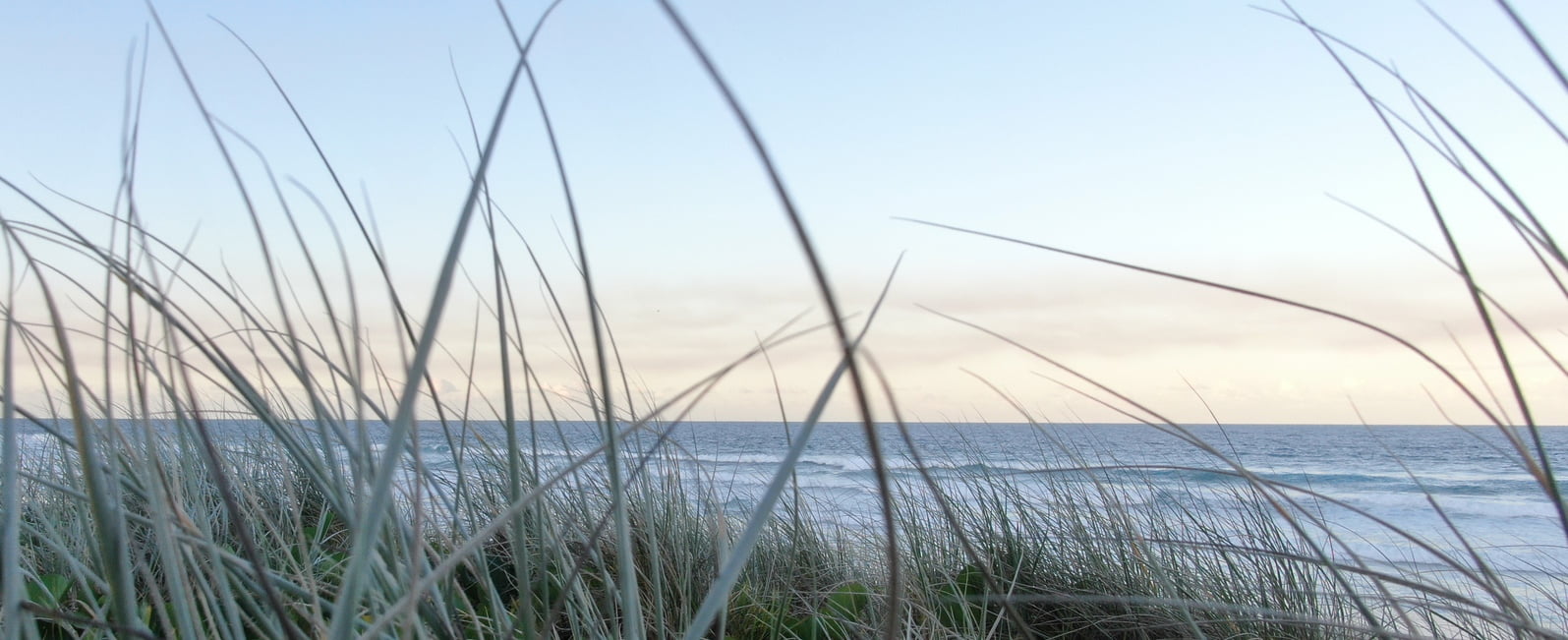
 SWAMP, wetland, marsh, marshland, everglade – there are a variety of different names for wet areas covered in native vegetation and the specific mix of reeds, grasses, shrubs and trees will of course depend on how the areas is managed, including whether it is regularly burnt or grazed – or not.
I’m have never advocated a particular management regime. Indeed I support calls for fewer cattle in the Macquarie Marshes and more in the Redgum forest of the central Murray Valley.
Cattle will change the composition of the vegetation and keep an area more open and with fewer reed beds which is apparently why they are encouraged to graze the wetlands just outside of Stockholm.
The photograph of the red fox and a bull was taken just outside of Stockholm by Ann Novek.
****************
Notes and Links
Ann has two blogs at http://seaspy.bloggsida.se/ and http://annimal.bloggsida.se/
Find more information on foxes at http://www.canids.org/species/Vulpes_vulpes.htm
The colour of the fox varies in Sweden from greyish pale orange to dark red with black legs.
Click on the photograph of the fox and the bull for a much larger and much better view.
 Jennifer Marohasy BSc PhD is a critical thinker with expertise in the scientific method.

American bison may be better adapted than cattle to some types of rangeland during the Winter months. Their powerful neck muscles enable them to push snow aside, in order to get at the grass underneath. To me, American bison tastes like Angus beef. Here’s a link to a wikipedia image.
http://tinyurl.com/paqtax
I understood the current idea was that grazing animals are constanly on the move, so to pen them creates problems.
The new system, I gather, is constantly moving grazing animals from paddock to paddock. I’ve observed the application first hand and IMHO it works.
The emergence of plants that can’t survive the constant grazing allows the grazers to get the benefit of an additional set of herbs in the grazer’s diet as well as avoiding the worm problems.
If we control our grazers and keep them away from streams and rivers we could revive this tired old land.
Larry,
I came across an item on a blog re. the American bison, apparently they are being driven out of some parts of Montana, “hazing” was the term used, for fear of spreading cattle tuberculosis.
Do you know anything more about it?
Cheers
There is a divide among the NGOs re cattle. The birdpeople support grazing in the wetlands( it’s their idea to have cattle in the nature reserves for birds) . More on this on my blog later today with pictures.
You must as well recall that the cattle is rotating among a few paddocks. You must as well remember that the cattle is penned indoors for the winter months for most breedings, but not for the Scottish Highland Cattle , that is suitable to be on the pastures with additional feeding all year around.
Actually the milk producers are running a campaign calling ” cows are our everyday heroes” or ” the heroes of the pastures” for grazing the landscape so it is ” open”.
Of course this sounds very strange for most environmentalist that have read the FAO report ” Livestocks long shadow” , which is a bible for NGOs.
You must also know that the number of cattle in the wetlands is not many, so the pressure on grasslands is not big. Sheep is also used for the same conservation efforts….
Asians can smell the dairy products on westerners.
Here are some pictures of cattle in the wetlands, that are bird protection areas….note as well the birds on some shots:)
http://seaspy.bloggsida.se/okategoriserad/cattle-in-wetland
Ann,
Great photos! Do the cattle improve the bird numbers or the species-of-birds numbers or both? And do you get frogs in your wetlands?
Ann,
Is that a female Rose Robin on the fence post?
Thanks Drongo,
I don’t know the exact answer to your question , but undoubtedly more rare species are now spotted in these protected areas.
Unfortunately , despite that I have wanted to I have not detected any frogs in these areas, one area where there used to be frogs , is empty of frogs this year!
Unfortunately as well the situation for frogs ( all species) is very dark. There used to be white storks in southern Sweden, but they are extinct now in the wild, due to lack of frogs.
Re your question about the bird. A very good guesstimate:))))
This is a whinchat , that is a relative to the European Robin.
Drongo,
You can see a whinchat to the far left on the last pic, a yellow wagtail and greylag geese on the shots….
Marcus,
Here’s a link to a wikipedia article that partially answers your question.
http://en.wikipedia.org/wiki/Mycobacterium_bovis
This particular beastie can infect a variety of hosts: cattle, bison, badgers, elk, white-tailed deer, humans, etc. One of the concerns in Montana is the WILD bison in Yellowstone National Park. Many of them carry the bacterium, as well as brucellosis. And the bison come in contact with cattle on private land that borders the park.
At one time, bovine tuberculosis was a big problem. But thanks to pasteurization of milk and testing of cattle herds, the incidence is greatly decreased.
The Jellystone problem is not bison per se. These bison are not tested, and the infected animals are not culled. Moreover the park is not fenced off from the private land. (Bison can jump a cattle fence of standard height.) Should the Park Service undertake testing and culling, or build an extra-high fence around the park? I don’t have a strong opinion on the subject.
those cattle are some sort of a highland one?
this is very simple:
using cattle (especially such specific races) to keep an area in the condition that the community7region wishes it to be, is a good idea.
claims that the normal cattle production benefits the country 8and should be expanded) is mostly false.
There is as well built a little dam in one wetland , to keep more water in it ,regulate the level of water. There will be some pics on this in some hours on my blog.
Pics and summary on the wetlands in English:
http://seaspy.bloggsida.se/okategoriserad/angarnsjoangen-wetland-nature-reserve-for-birds
Anne
“Of course this sounds very strange for most environmentalist that have read the FAO report ” Livestocks long shadow” , which is a bible for NGOs.”
See this (via Helen Maher) on how good a bible:-
http://www.stuff.co.nz/national/farming/664606
From
http://jennifermarohasy.com/blog/2009/05/if-you-are-australian/#comments
This notion that domesticated animals should be excluded from water courses is very common but is pure green ideology that is devoid of fact. Was there ever a time when native grazers were excluded from water courses? Of course not. Observe the abundance of footage of African water holes and take note that the impacts of grazing animals at those locations are ENTIRELY NATURAL. Ditto for the damage done when Caribou cross rivers in their seasonal migrations.
In fact, the evidence is overwhelming from farmland where all trees had been removed in the past that the soil disturbance in riparian areas from grazing animals has been instrumental in re-establishing trees in those zones. However, it is now the norm for these obviously regenerated woodlands to be officially described as remnants of the original forest. And once they have been thus mis-labelled then it is a short step to describing the trees as being under threat and the soil disturbance as environmental degradation.
Grazing animals have always got their water from adjacent rivers and streams. Get used to it. And spare us the green guff designed to deprive farmers and their animals of an important part of their natural assets.
Jennifer asked on my blog what the yellow flowers were? They are dandelions, a weed in the garden , but good fodder on the pastures.
Photo : http://seaspy.bloggsida.se/okategoriserad/dandelions
Hi Larry,
Re. bison.
I have no particular barrow to push here either, came across it on an other forum, quite unrelated to environmental issues, and it struck me as strange, than a national “symbol” so to speak, would be handled in such a way for no apparent reason.
Dandelion leaves are a good substitute for spinach but they need a day or two under a bowl or such like before picking to blanch the strong taste. One must never pick the ones near light poles or posts as these will be covered in dog urine.
You can as well make very good and strong dandelion wine of a mix of dandelions, oranges , sugar, rye, yeast and let it ferment.
I have updated my dandelion post btw.
Ian,
Apparently in Italy they are known as “dog piss” because they are so common beside pavements.
http://en.wikipedia.org/wiki/Dandelion
BTW do you know if the Australian dandelion also known as flat weed which looks very similar, is related to the European flower?
Actually dandelion’s Swedish name ” maskros” is translated to English as ” worm rose”!
And it is a yuppie food to have in crispy sallads….
Hi Ian B,
Thanks for making a comment. Indeed cattle have been blamed much for blurping, farting and degrading grassland etc.
Often we forget there are benefits as well for wildlife with farming.
Migratory birds rest often in the fields, eating seeds to make an example…..
Hi Spangles, the Wikipedia article seems to suggest that the Aus version is the common European weed.
Observe the abundance of footage of African water holes and take note that the impacts of grazing animals at those locations are ENTIRELY NATURAL. Ditto for the damage done when Caribou cross rivers in their seasonal migrations.
Ian – in both cases you quote the animals are on the move, constantly grazing as they move on – they DON’T hang around the waterholes for months on end damaging the banks and ecosystems as occurs in aussie fenced paddocks.
You don’t have a clue, Janama. Do you think the creek banks are the only place that grass grows? You do accept, I hope, that grazing animals eat grass, and that this necessarily involves wandering over the entire paddock, don’t you?
Any increase in the extent to which they spend time by the creeks is due to the fact that there is usually more shade there during the hottest parts of the day. And in that time they do not ponce about like urbanites on a picnic. Rather, they rest, on their stomachs, while they chew their cud. And we can be quite certain that there is no science that would indicate that cud chewing causes soil erosion. Ergo, soil disturbance is not a function of time spent at a particular location.
Furthermore, there is more shade by the creeks because, as mentioned above, the animal’s own hoof marks have provided the contact with mineral soil that many tree seeds need for successful germination. The grazing stock are simply enjoying the benefits of their own impact on the landscape.
And you seem willing to recognise that fence paddocks can concentrate the impact of grazing on a small area but then choose to ignore the fact that the same system of paddocks will ensure that there will be zero impact when the stock are in one of a number of other paddocks. They too, as you put it, are also “on the move, constantly grazing (in other paddocks) as they move on”.
But thank you for providing such a good example of your personal anti-farming prejudices.
Ah – so you are now attacking me – that’s cool as I was feeing left out.
I’ve proabably spend more time observing cattle by creeks than you’ve spent oggling at school girls and am well aware of the damage they do and how they affect the vegetation beside a creek, which by the way isn’t normally grass as it should be reeds and other water plants with trees who’s roots hold the bank together. I suspect it’s a basic biology lesson in today’s schools but being a redneck from Main Arm you would have thought it was all hippy bullshit.
Now hold on there Janama. You clearly implied that cattle in paddocks remain in the same creek bank for months when the facts are that they are moved around in a number of paddocks. And even green gonzo logic would have to accept that cattle that have been moved to some place else cannot possibly be still causing damage in the original location.
Therefore, your original statement, that domestic cattle are unlike natural grazing animals because they don’t move about, is plain bull$hit. And your suggestion that grass never grew on creek banks is just plain ignorant suburbanite fantasy.
The nature of riparian vegetation is determined by the nature of the creek itself, (ie 1st order, 2nd, or 3-4th order stream) the nature of the rock or soil strata over which it flows, the slope of the stream bed, the composition of the bed material, (ie rocks, gravel, sand or silt) the slope of the banks and adjoining land, the volume and frequency of flows, the presence or otherwise of seed sources, the presence or otherwise of competing plants, the history of the site, including fire history, and the character, scale and intensity of grazing systems.
Readers can easily compare your simplistic, two dimensional ideological demonisation of farmers with my detailed, and yes, born again red neck, understanding of the issue and readily conclude that you have, indeed, been massaging your prejudices by sprouting ignorant hippy bull$hit. It might pass for coherent content in the BS Echo, old mate, but this is a sane, intelligent audience that would pass a blood test. It doesn’t fool anyone here.
I happen to live in the country Ian, and have done so for as long as you’ve been alive. I observe agriculture and talk with farmers nearly every day – I’m fully aware of their views and opinions.
I have observed the continual destruction of our river systems through overgrazing by cattle and I’m not alone in my view of this.
http://www.cw.cma.nsw.gov.au/pdf/Information/BMPs/CWCMA_Information_BMP_0288_ripariansheet_livestockmanagement.pdf
http://www.fba.org.au/publication/downloads/Property-planning-Sustainable-grazing-on-riparian-lands-FINAL.pdf
Hi Spangles, the Wikipedia article seems to suggest that the Aus version is the common European weed.
Oh really, Janama. What you see and what others see is obviously quite different. I have lost count of the number of departmental boofheads who will point out what they think is a severely degraded forest but which, in fact, is a regrowth forest on previously cleared land. The former indicates a degrading ecosystem while the latter is clear evidence of an improving one.
And you gain no credibility at all by referencing NSW Catchment Management Authorities. These are the people who have singularly failed to report on the net forest flux (ie clearing vs regeneration) in their regions. These are the people who had a legal and moral obligation to correct the record on native vegetation clearing in NSW but did not. When the head of the Botanic Gardens extrapolated from the Moree Plain to get a NSW clearing estimate of 150,000 hectares/year it was the duty of the catchment management people to point out, to the policy process and the public, that clearing in their own region was nowhere near the scale that was extrapolated from at Moree.
Subsequent satellite surveys, done by SLATS in Queensland, (I am a member of the advisory committee overseeing this function) found that actual clearing, including both regrowth and remnant native vegetation, was in the range of 8,000 to 12,000ha each year throughout the period when Carr, the Departmental goons, and the greens, were flogging the 150,000ha estimate for all it was worth to scare the public into applying regulatory measures that the circumstances did not merit.
The catchment management people who knew this to be incorrect but did not correct the record are the lowest form of criminal scum. It was a 12 to 19 fold misrepresentation of the facts. This is particularly the case in the NSW North Coast where the net change in native vegetation over more than half a century has been unambiguously positive.
And all you can come up with are a few bull$hit anecdotes about what some sad twisted anti-farming bigot might have thought he saw through a dope clouded haze and a link to the web site propaganda of some of the sleaziest departmental goons on the planet. Give us a break. You forget that, as the Bard (Mark Anthony) said in Julius Caesar, “The evil that men do lives after them”, and we have very long memories.
“what some sad twisted anti-farming bigot might have thought he saw through a dope clouded haze and a link to the web site propaganda of some of the sleaziest departmental goons on the planet. ”
I’m so glad you repect my conversation to this degree.
perhaps in the interests of all, we cease it.
Re Ann Novek May 26th, 2009 at 9:32 pm
“Hi Ian B,
Thanks for making a comment. Indeed cattle have been blamed much for blurping, farting and degrading grassland etc.”
http://www.stuff.co.nz/national/farming/664606
Anne if you read the link you would find that
“FAO report ” Livestocks long shadow” , which is a bible for NGOs.” lumbers livestock with emissions from land use change.
The gospel according to whom?
One of my hiking acquaintances comes from a cattle-ranching family. According to Pat, filaree flowers are an indication of good pasture land in the Sierra foothills. Here’s a link to the wikipedia image.
http://tinyurl.com/povyxj
A Picture Tells a Thousand Lies.
Janama’s link to the Catchment Management Authority web site on riparian grazing demonstrates how a picture tells a thousand lies.
http://www.cw.cma.nsw.gov.au/pdf/Information/BMPs/CWCMA_Information_BMP_0288_ripariansheet_livestockmanagement.pdf
We see cattle by a creek and some exposed soil and most metrobogans would first conclude that this picture is representative of the entire length of the creek on that farm and representative of the situation on all grazed creek banks.
But we can be quite certain, given the proven MO of CMA’s and their staff, that the picture shows worse than average impacts. A random inspection of 2nd order farm streams is unlikely to provide a single example of conditions like those shown. It is also highly improbable that those conditions would be replicated over the entire length of that particular stream. Indeed, there may be only one or two such examples on the entire property.
It is also quite certain that the conditions produced in the photo represent the sum of all cattle damage over a period of more than 100 years. And once the landform modification has been made by the stock to match their normal level of traffic, the rate of change (so-called degradation) will slow. Most of the modification shown in the photo would have been done in the first few decades after settlement. And it begs the question, do we regard a road culvert as evidence of land degradation? Or do we regard it as a piece of infrastructure that is a normal and necessary part of the prevailing use of the land as a road? Clearly, we view it as the latter. So why do we regard customary tracks (roads) made by cattle for their own on-going use as anything different to our own road culverts? Both involve an initial excavation that exposes soil and both then involve only minimal soil disturbance for many decades after.
To its credit, the site linked to above does include some helpful tools for minimising on-going soil movement. And just as for our own road culverts, this involves paving the most prone parts of the road with rock and concrete. The irony is that this simple, logical solution can only be carried out with the approval of DPI and the additional cost and effort that involves. And it is also fairly obvious that any approval for such works would only come with very significant and expensive conditions like fencing off the entire riparian zone and installing unnecessary watering points and piping.
Don’t get me wrong, additional watering points away from streams and dams make very good sense as they spread the grazing intensity more evenly over the entire area. But when faced with baseless, ideologically driven demands to render existing in-stream watering points redundant as a condition of approval for your voluntary good works, most farmers, justifiably opt to let the authorities go f@#$% themselves.
Readers might also observe the third photo in the link which claims to show an algae laden pool full of bovine sourced faecal ecoli that has rendered the water undrinkable. But what they do not tell us is that this is a temporary condition that starts at the beginning of a dry season and will only last until the pool dries up later in the season. More importantly, they do not mention that most high faecal ecoli counts are the result of self reproduction in the warm stagnant water. As was found to be the case with Canberra’s Lake Burley Griffin, most algal blooms are of a secondary or “regrowth” nature, if you will. The ultimate concentration of these ecoli is not a function of the volume of ecoli being supplied to the pools in runoff. Rather, it is a direct function of the length of the dry season, the temperature, the shallowness of the pools and the frequency of intermittent runoff events.
Clearly, a picture can, indeed, tell a thousand lies. And government and green pictures tell the most lies of all.
unfortunately Ian cattle are only one of the problems as there has been total neglect of the river banks and river systems throughout this country – just drive around it, as I do, and observe the condition of our rivers and their banks.
Everytime I drive to Casino I follow a river that has totally eroded banks which are held together by the new weed growth after the last flood only to be washed way, with the associated soil, in the next.
May I recommend you check out Peter Andrews
http://www.youtube.com/watch?v=6gWwBtw8iu0
and watch the 10 videos where he describes how he turned the river system on Gerry Harvey of Harvey Norman’s Barramul Stud around ultimately improving the pasture as well. Peter Andrews spent years battling the academics over the hydrology of the land who yet he was finally vindicated and they had to about turn and accept his theories were valid.
Greens and boofocrats are fond of their little showcase examples of supposedly sustainable agriculture. The previous one was Lanark in Western Victoria and now we have this Andrews stuff. But both these cases do not pass the critical test of sustainability which is to ask the question, “if everyone did as I do then would it work?” In both cases the answer is no.
Both systems involve a level of capture and retention of runoff that is far in excess of the proportion of extractions from the much maligned Murray-Darling Basin. If every farmer in the MDB adopted the Andrews system then the Murray, in South Australia, would be a very sorry little trickle indeed. In fact, my understanding is that the Andrews showcase involves a fairly high level of capture, albeit through passive, assisted natural means, of flows from further up the catchment. And one is left wondering how ordinary his system would look if the guy up stream did exactly the same thing.
It is most certainly the case for both Lanark and the Andrews system that the total capture of runoff is far in excess of the level defined in NSW as the as-of-right storage percentage. This level assumes that 10% of total rainfall is runoff and that only 10% of this (1% of RF) is a landowners right to capture without consent. Mr Harvey’s neighbours need to ask the CMA to investigate whether Andrews has, in fact, constructed storage works without consent, and is involved in extractions from the system without a license.
Yes, it does look very impressive. But is it primarily because he is using someone else’s water?
And I note, once again Janama, how you have sidestepped the points I have raised that contradict your previous posts. First it was Camphors in Main Arm when the nearest significant clump of camphors is about 4km away. Then it was stock damage, with a link to some serious misrepresentation of fact. And now its the banks of the Richmond river on the way to Casino.
But from my recollection of what you see from the highway near the Coraki turnoff, you have been looking at nothing more sinister than a standard incise bank of a meander. You have this image burned into your mind of some supposedly serious degradation when all you are looking at is the outer bank of a river bend which is always scoured by flood flows. You fail to notice that the other side of the river in such locations is characterised by sediment deposition.
Lets face it old mate. Your mind is so full of environmental apocalypse that your ecological glass is always half empty. There have been detailed studies on such cognition which have repeatedly shown that pessimists like you have a measured inability to recognise and retain positive signals. You only find what you want to see.
And this excessive pessimism, like excessive optimism which cannot retain negative signals, is one of the primary characteristics of unreasonable men and women. The business of government and policy is the sole preserve of the reasonable, those who can recognise both kinds of signals and respond with proportionate measures. The unreasonable may vote, but government is required by law to disregard the urgings of the unreasonable. And here in Australia our governments have not done so. They have implemented disproportionate measures at the behest of unreasonable greens who are incapable of considering all relevant facts on their merits.
And that is why myself and many other farmers now refuse to allow trees to regenerate in riparian zones, refuse to fence off creek banks and refuse to implement any of your claimed ecological improvements untill we see hard evidence of an enduring return of our property rights and the full restoration of integrity to the policy process. You don’t deserve a single extra tree.
Dandelions part II:
http://seaspy.bloggsida.se/okategoriserad/dandelions-part-ii
Sorry Ian B. . as my English is quite poor I must say that I’m not able to give you a reply 🙂
Ian – you missed the whole point that Andrews was making. He’s not trying to store water, he’s slowing it down – the same amount of water eventually reaches the main river systems and if you’d listened you would have heard him say that when Sturt came across the Darling it had systems, like his, 50 mile wide and 50 miles deep where the water was slowed down. The intention is just to slow it down to the rates it used to have before the paddle steamer owners burnt all the reeds and opened up the channels to create the river we know today. Apparently they totally changed the whole hydrology of the river in 10 years.
The river I mentioned was not the one you think it is – it runs east towards Casino from Mummulgum but it’s typical of other rivers in the Richmond and Clarence catchments.
Regarding the camphors, you suggested that there was intense regrowth in the northern rivers carried out by farmers at the farmers expense and without the aid of tax dollars. I’d very much like to see the areas you mention as all I’ve observed is good pasture land being overun by camphors and lantana or rows of trees in plantations grown as a tax deduction for Great Southern Plantations who I’m sure you are aware as they went belly up recently not long after their CEO resigned with a 2.5mil payout and their new directors had given themselves a 150K pay rise! The only other tree planting I have observed are macadamia and coffee plantations which appear to be successful businesses that PAY tax.
Cattle can indeed degrade river banks and water holes:
http://seaspy.bloggsida.se/okategoriserad/cattle-in-wetland-part-iii
I have also previously posted comments that keeping a small number of cattle might be a benefit for birds and insects.
Ian Beales link to http://www.stuff.co.nz/national/farming/664606 spells out that the greenhouse contribution for cattle was calculated from cattle in the amazon basin.
The CO2 sequestration lost from cleared rainforest was added to the cattle emissions as part of their contribution. This figure, the ‘bible’ for cattle emissions, has been extrapolated to natural grazing systems over large areas of Australia, NZ, Eurasia, Africa, and Nth and Sth America, where forest did not have to first be cleared. They are natural pastures. This sort of add-on, especialy if extrapolated inappropriately, is called creative accounting, or (pun intended), cooking the books.
The presence of one example of cooked books raises questions about the other calculations.
I thought the whole AGW barney was about ancient carbon being added to the atmosphere via power generation. Last time I looked cows were eating neither coal nor oil, but grass. Like all animals, they are part of the contemporary biological carbon cycle, and can make no difference to the amount of contemporary CO2 in the atmosphere.
I look forward to the day when using grazing animals sensibly, as in the post above, is no longer a matter of comment or controversy.
Larry mentions flaree flowers as an indicator species for good grazing in the sierra foohills. That tells me immediately he is referring to an unimproved, natural pasture. We also have indicator species. Their presence in reasonable numbers indicates good pasture. Their absence indicates overgrazed pastures.
Good points, Helen!
CSIRO, the farmer’s friend, are so proud of the prize they won for computer modelling animal farts and belches along with land clearing in Australia and so I reckon your argument would apply to them as well.
When you think how farm and livestock levies support them you would reckon they might have found the time to be a bit more factual.
http://www.csiro.au/partnerships/NCASpartnership.html
BTW, my favourite indicator species are Zornias and Spear Violets in our NOTW.
And the old Paper Daisy of course.
If all you have seen is camphors, Janama, then you have not been looking beyond the main roads and have only been hanging around the Lismore/Ballina/Byron triangle. All the private land from well south west of Nimbin, the Channon, Coopers Creek, Huonbrook, Upper Wilson’s Creek, Upper Main Arm, Palmwoods, The Pocket, Burringbah, back through Dunbible, Uki, Chowan Creek, Kungur, Doughboy and right through to Kyogle etc was completely cleared. And I don’t mean just to the hillsides but right to the back boundaries which were often to the top of the hillsides. The only bits of native forest on private land that are not regrowth will be found on very steep south facing slopes.
As I said above, I have the aerial photos to prove it but I also viewed the whole district from the back of the family ute right through the 1960s (ie before the view was obscured by roadside camphors).
Aside from Federal/Goonengerry almost all the roads in the region go along the river flats and the view from these camphor infested roads gives a very distorted impression of the actual state of native vegetation. In 1953 only about 10% of Byron Shire was covered by native forest. It is very easy to identify in the old photos because it started at the back boundary fence. The most recent estimate by DLAWC et al puts native forest at over 30% with another 10% covered in camphor.
There is zero doubt that almost all of the native forest was well established BEFORE the 1970s arrival of our gratuitous planet salvationists. It took place when the farms were still being grazed and the decision to retain trees was deliberate, and came at the cost of lost grazing income. I also have a copy of a 1975 landowner group submission to a parliamentary inquiry on the need for a market for the large area of regrowth thinnings in the region.
And frankly, Janama, your continual sequence of anecdotal images and unrepresentative snapshots, that you are apparently comfortable with taking as fact, even when clear, incontestible evidence is presented to you, is more than just a little bit boorish. You are far from the only person in the region that has lived for a lengthy time in an imaginary landscape of half impressions that you have barely understood. But arrogant certainty was always the other half of ignorance.
And no, Janama, it is you who do not get the point about Andrews method. By slowing down the water it remains exposed to evaporation. And I simply cannot believe that you do not understand that all the lush evidence that is presented by Andrews as proof of his success is also evidence that the water is being used up, not just slowed down.
Do you seriously believe that lush pasture, shrubs and trees, that remain in their abundant green state long after surrounding vegetation has dried out, have not been using much more water than the parched vegetation? The fact that great swathes of the public and the bimbocrats have so readily swallowed this guff is no surprise but no less damning.
Andrews brags about how his modified landscape remains lush all year round. And he does this in the 500mm to 800mm rainfall zone where the annual soil moisture DEFICIT is more than 10 megalitres/ha. Blind freddy can see that his system must be reliant on significant additional inputs of water to produce these results.
It reads like a great story to green ideologues but there appears to be prima facie evidence that Mr Harvey has carried out substantial works that have produced a material change in his uptake of a regulated natural resource. I think the authorities need to take a much closer look at this to get to the truth.
For the record
http://qcl.farmonline.com.au/blogs/out-here/conservation-cows-out-to-change-ags-image/1359700.aspx
Thanks all commenters for interesting links!
Cheers,
Ann
Ian – I came to the area in 1977 – I owned land in Goonengerry which was clear and is now covered in camphors. I used to visit a relative in Doon Doon which I would access via Huonbrook. Try doing that today. I’m fully aware of what the area was like in those days, I’m also aware of the intense regrowth that has occured since – I just dissagree with you that the regrowth was man induced as your claim – the area naturally grows back to forest if left alone and the predominant tree is the camphor – that’s why the Condong Mill power station was created, to burn bagasse AND the camphor.
so instead of abusing me take some note of the FACTS!
FYI the Camphor Laurel tree was introduced to the area by the Education Department. All schools were issued with seedlings and encouraged to grow them in their playgrounds as they offered year round shade and didn’t drop branches like the native gum trees did.
You continue to place your own impressions above the recorded data, Janama. I agree that much of the regrowth since 1975, in a somewhat deformed triangle that includes Goonengerry, is camphor. But the regrowth prior to that was mostly native. It has gone from 10% of the shire to 30% while camphor has gone from less than 2% to 10%. And yes, a much faster growth rate.
You obviously believe that all it takes to produce a native regrowth forest is to do nothing. But during the 40’s, 50’s, 60’s and early 70’s the expansion of a forest was the result of a deliberate decision to modify pasture maintenance activities and forego future income from grazing. It was often associated with another deliberate decision to favour the original species mix rather than the default species of wattle.
My Father, and Grandfather before him, were BGF (Banana Growers Federation) Directors from the 1940’s through to the 70’s and they played no small part in the planting of Tom Rummery Forest as a source of timber for Banana cases. The submission I refered to above was to the 1975 State Governments inquiry into the feasibility of a woodchip industry for the NSW North Coast. A core issue raised in that submission was the need for a market for the very large stock of low quality regrowth stems (ie bent stems or the short trunks, or multiple stems and wide branching of trees that formed in open paddocks). The selective removal of these were, and remain, the key to providing the retained stems, and coppice stems from the culled stumps, with the opportunity to grow tall and straight.
It is now a matter of record that the newly elected Wran government (1976) rejected the proposal based on the incredibly ignorant belief that the available resource was “old growth” and in need of protection. The fact that most of the resource was on land on which the Soil Conservation Act already provided the state with powers to ensure only limited clear felling took place went right over the urban moron’s head.
And it is a simple fact of history that this decision marked the end of serious efforts to encourage the further spread of native regrowth on the Nth Coast for the next 20 years. It was the green movement’s first policy “win” but the message it sent to the farming community was that governments and greens could never be trusted. From that point onwards farmers saw subdivision and sale as the only viable long term investment option.
And from that point onwards, the spread of camphor laurel was the inevitable consequence of the greens and government getting the environment they deserve.
PS I was speaking to the Sugar Millers more than 10 years ago as a forest owners rep regarding the supply of regrowth thinnings as a co-gen resource for exactly the same reasons as given in 1975. You can’t produce a quality forest if you don’t have a market for low quality trees. But they were not willing to pay enough to even cover the cost of the cutter, let alone the haulage and a modest royalty. And the greens were there, again, ranting boorishly about protecting their non-existent “old growth”.
And that, Janama, is why I now encourage Camphors that germinate on the parts of my place that do not have native regrowth. They grow quickly and produce a high quality log if they are pruned and spaced. And they are the only species, other than the loathsome pinus radiata, that provides anywhere near the long term certainty of being allowed to harvest that a serious forestry operation must have.
One of my blocks is owned by my Superannuation Fund. There are very specific duties on fund Trustees to invest prudently. And it may come as a surprise to you to learn that I actually have a letter from a Director General confirming that there is NO LEGAL MECHANISM that would enable me to expand my native regrowth forest whilst complying with my fiduciary duty of care as an investment trustee. It is an admission from the highest level that the current legal framework is not just an impediment to native forest expansion, it effectively precludes it.
You guys have made your bed, so sleep in it.
Ian – I now know where you come from. I’m really not interested in your financial dealings nor your family’s farm. I do know that the addition of my 2 children in 77 kept the Goonengerry school open when the others around it were being closed.
The land you inherited was grazed by dairy cows – 120 acres = 120 cows= cream to the buttery and skim milk to the pigs. Naru superphosphate kept it going. Once the Brits entered the EEC in 72 and no longer needed your butter your farms were ruined, and the whole family structure shattered.
funnily enough it was the Aquarius Festival in 72 that saved you.
I hope this makes it as I’m playing with linux
No, Janama, the land that I paid full market price for to my siblings grew Bananas with another 300 acres leased to migrant families and we grazed cattle on the remainder and gradually converted it to native forest.
When the two main industries declined we, along with many other land owners, had a vision of a landscape that was returned to the original wet schlerophyl mosaic that would be profitably managed for timber production in perpetuity. Some 75% of all wood that grows in a regrowth forest is of low quality. And while 3,000 or more young stems will grow on each hectare in a successful regeneration effort, there is room for only 100 mature trees/hectare at final harvest time. Nature decrees that 2,900 trees must be progressively removed to maintain the growth of the retained stems.
It is an incontestible fact of history that the green movement and the Wran Labor Government denied us access to that market on the basis of blatant falsehoods and unfounded fears for the safety of non-existent old growth forest. If we had gained access to that market for export woodchips the farms of the region would have had a viable alternative to subdivision into “prickle farms”. And there is not the slightest doubt that the early stages of the camphor laurel invasion would have found their way onto the trucks as well.
So you may well like to pat yourself on the back for saving a school from closure but it is small beer indeed compared to the dreadfull landscape consequences of the greens collective ignorance and entrenched negativity. So next time you take a drive through Upper Main Arm just slow down at the end of the bitumen, take a short drive up Mott’s Road (the one least travelled by) and reflect on the fact that the entire valley was bare pasture in the 1942 photograph, compulsorily cleared on pain of forfeiture of the land title. And then try and tell me that our path, not your’s, and not the Government’s, would not have made all the difference.
Ian, I was hand milking cows on my parent’s farm in SEQ in the late 40s, early 50s and all the district was devoid of trees to the tops of the steepest mountains causing all sorts of problems with breakaways, flooding and erosion.
Over the years I suggested to my children for life insurance purposes or a good investment, “there’s a few acres, go and plant some red cedars, maple, ash, silky oak etc, they grow like weeds [40 foot high in 10 years]”. My kids never did but it didn’t matter because today you can’t harvest those that did grow anyway.
Very good cases can be made for selective logging and 20 acre subdivision but no one’s listening.
Cohenite talks of the Great Pacific Climate Shift of ’76 and I wonder if that accounts for logic as well as climate?
So you may well like to pat yourself on the back for saving a school from closure but it is small beer indeed
no Ian – I was pointing out that I was there, and had an influence, we all did, the “migrant families ” you refer to….. no doubt my friends.
We moved into your area and created a new economy and it’s now the most valuable real estate in rural NSW. I’m not sure what your problem is. There’s no way you’d make a living selling the trees you planted back in 72. My friend Stanley made a living extracting the fallin logs and slicing tree stumps for table tops, but timber farming in northern NSW is proving to be a Dodgy Bros venture – no one has ever thinned the Great Southern Plantation plantings around here and no one will.
Unless you can pour heaps of dollars to landscape your property in to some kind of idillic rainforest venture I’d sell out to someone who can.
Janama, the migrant families we leased land to had good Australian names like Neclario, Palasari, Nylund and Sing. There was a time when they could not legally own land, being non-british subjects, and my grandfather was a campaigner to extend property rights to include them. Unlike the people like yourself who came later, these people were never afraid of an opportunity disguised as hard work. They were the kind of people who were comforting to have around in a bushfire or flood. And they would never dream of taking something that did not belong to them.
And still, you just don’t get it. There are two reasons why timber farming in Northern NSW is not profitable. It is plantation based and that means high initial costs which cannot be recouped at realistic growth rates. A native regrowth based forestry model has much lower establishment costs, involves a gradual shift from grazing to forestry and the required growth rates are consistent with the climatic conditions.
The second reason why it is not profitable is the absence of a market for early thinnings. Early cash flow is absolutely critical to the profitability of any long term venture and woodchips for the pulp and paper value chain were, and remain, the only proven option. That is why no-one is likely to thin any of the Great Southern trash. And it is a matter of record that the greens and the Wran labor government destroyed the viability of any sort of significant forest restoration in the region by preventing this essential component.
And I point out, again, that if this capacity to export woodchips had been present over the past 33 years then it is an absolute certainty that we would not have any problem with Camphor laurels. You now have the environment you deserve.
And you now have a seriously unsustainable mix of high land prices that are completely detached from productive capacity in an economy that can only stay afloat with a hideous population growth rate that is rapidly destroying the very ecological values you claim to be protecting. I have not been to Byron Bay for more than a decade because it is such a terribly sad place. And while you and your green mates like to posture about preserving the so-called unique character there is absolutely no doubt that it is you and your kind who have completely f@#$% the place, big time.
You amputated the future of the original communities and then entrenched a culture of new age version of “Ponzi” property speculation that can only survive with an ever increasing horde of appetites.
And readers will have noticed how casually you dismiss the absolutely damning evidence that a fund manager cannot comply with both the community’s standards of prudent investment and allow a native forest to regenerate on any land, in any state. These are not just my own “financial dealings” as you put it because a fund manager’s standards of prudent investment are also the whole communities expectations of themselves. The greens and the Labor Party make Sooooh much of their determination to protect and repair the environment but it is they who have established an entire legal achitecture that actively prohibits the most contributive action of all, the expansion of native forest habitat onto previously cleared land.
And by the way, the “Oscar” of Oscar’s Road, along which you went from Huonbrook to Doon Doon was my maternal grandfather. Like spangles, cows were hand milked in a pastured landscape. And the reason why you can no longer use that road is because one of your new age mates put up unlawful keep out signs, encouraged rutting, weed infestation and treefall on the road and abused anyone who had the gall to exercise their legitimate rights of transit. The prices of land may well have gone up but the quality of the people took a serious dive.
Ian – you know nothing about my work ethic so stop speculating.
Ah – you’ve finally admitted there is a camphor laurel regrowth problem having denied it until now. Unfortunately native forest doesn’t regenerate automatically in the presence of camphor laurels that outgrow the natives and their roots poison the soil inhibiting regeneration of other species.
That’s just a load of bull and you know it. The area rapidly expanded because of it’s superb climate, magnificent beaches and lush rainforests. – it is recognised as the best climate in Australia as it rarely drops below 20C or rises above 30C.
Hasn’t stopped the banana, macadamia, coffee, stone fruit, blueberries, Kiwifruit, passionfruit growers and they appear to plowing along and expanding.
It’s plain from your total lack of knowledge of the area that you haven’t been there for 10 years. I’ve checked your land from Google Earth and it looks like a typical north coast block that’s been ignored for the past 30 years and is overrun with weeds.
As I said before – why not sell it to some one who may care for it, as you said yourself – the prices are high.